





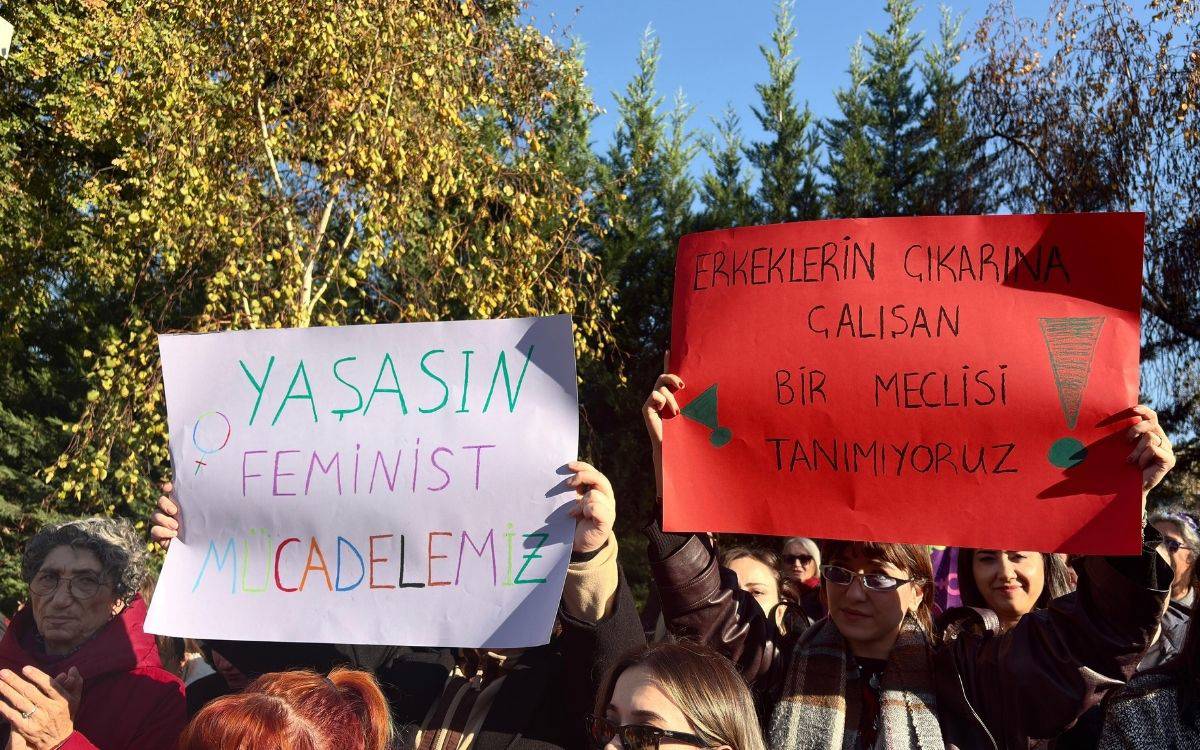



Proposed limits on alimony in Turkey could push women and children into poverty and prevent women from leaving abusive marriages, the Women’s Platform for Equality (EŞİK) warned in a statement to mark International Day for the Elimination of Violence Against Women.
The group urged the government to abandon plans to restrict spousal support, separate divorce proceedings from custody and financial disputes, and introduce family mediation. It warned that proposed changes to the Civil Code and measures under consideration for the 13th judicial reform package could institutionalize economic violence against women.
“We will not accept a fate of sacrifice in marriage and poverty in divorce,” EŞİK said. “We will not give in to economic violence or to judicial packages that strip us of our rights.”
Under the existing law, a spouse who would fall into poverty following a divorce can seek alimony from the other spouse, provided they bear no greater fault for the divorce.
In June, the Constitutional Court struck down the word “indefinitely” in Article 175 of the Civil Code following a referral by a family court in Antalya. The ruling will take effect on Jun 30, 2027, giving parliament time to amend the law.

Constitutional Court annuls indefinite alimony payment after divorce
Justice Minister Akın Gürlek welcomed the ruling in June, saying the government was already working on changes to divorce law. He pledged to introduce legislation that “does not subject either party to an unfair lifelong obligation.”
EŞİK said alimony recognizes women’s unpaid labor during marriage. Women in Turkey spend an average of four hours and 35 minutes a day on housework and caregiving, compared with 53 minutes for men, according to figures cited by the group.
The employment rate stands at 66.9% for men and 32.5% for women. Among women with children under the age of three, the rate falls to 26.9%.
The average alimony award is 1,179 liras, while 44% of court-ordered awards go unpaid, EŞİK said.
Legal expert Nazan Moroğlu noted following the June ruling that either spouse can seek alimony. Payments already end automatically if either former spouse dies or the recipient remarries. Courts can also terminate payments if the recipient is no longer living in poverty.
'Fast-track divorce' and family mediation
Under the proposed “fast-track divorce” procedure, courts could grant a divorce before ruling on alimony, compensation, child custody and property division.
EŞİK warned that women and children could be left without housing or income while awaiting rulings on their financial claims.
The Justice Ministry has said divorce proceedings take an average of 1,300 days. However, EŞİK cited 2025 figures showing that courts of first instance ruled on divorce cases in an average of 160 days, with 6.5% of cases lasting more than three years.
The group also challenged the assumption that spouses can negotiate on equal terms in family mediation.
It noted that 88.4% of divorce case files contain allegations of violence and warned that mediation could pressure women into relinquishing their rights. Turkey’s law governing mediation in civil disputes prohibits mediation in cases involving allegations of domestic violence, the group said.
EŞİK called for the full implementation of the İstanbul Convention, Law No. 6284 and the Civil Code. It also urged the government to expand access to secure employment and public care services, ensure equal pay for equal work, and introduce policies promoting an equal division of caregiving responsibilities between women and men. (VK)

