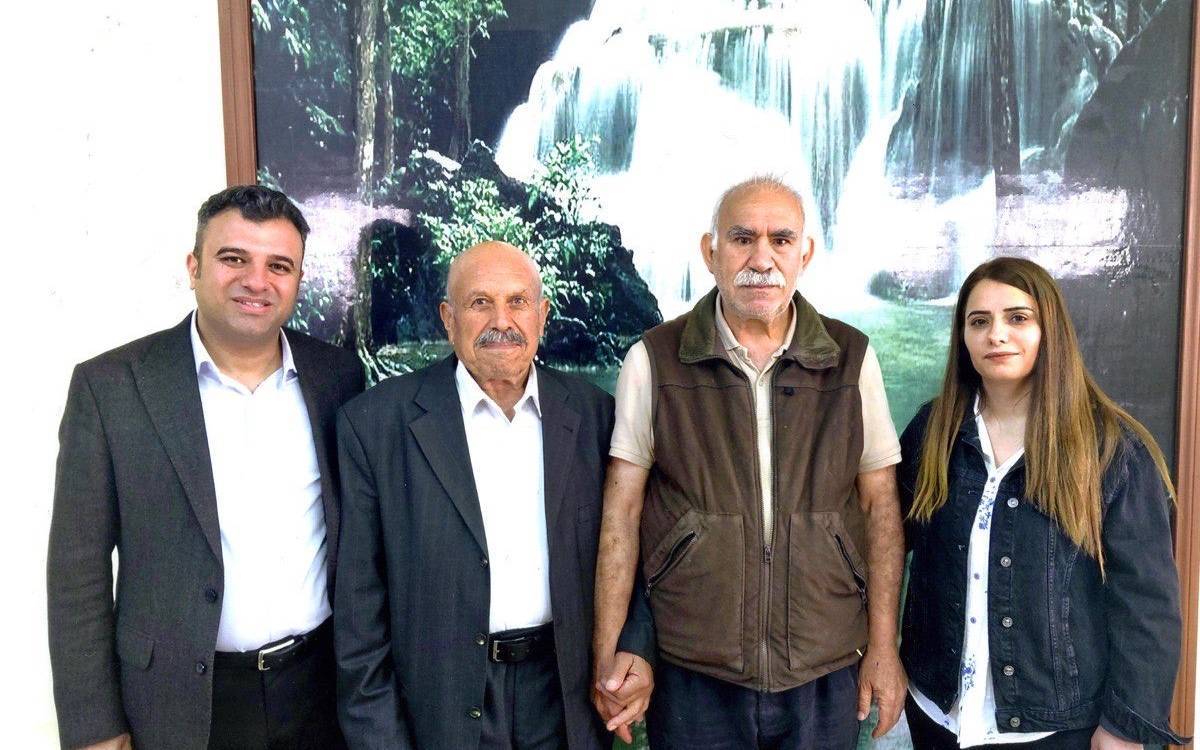


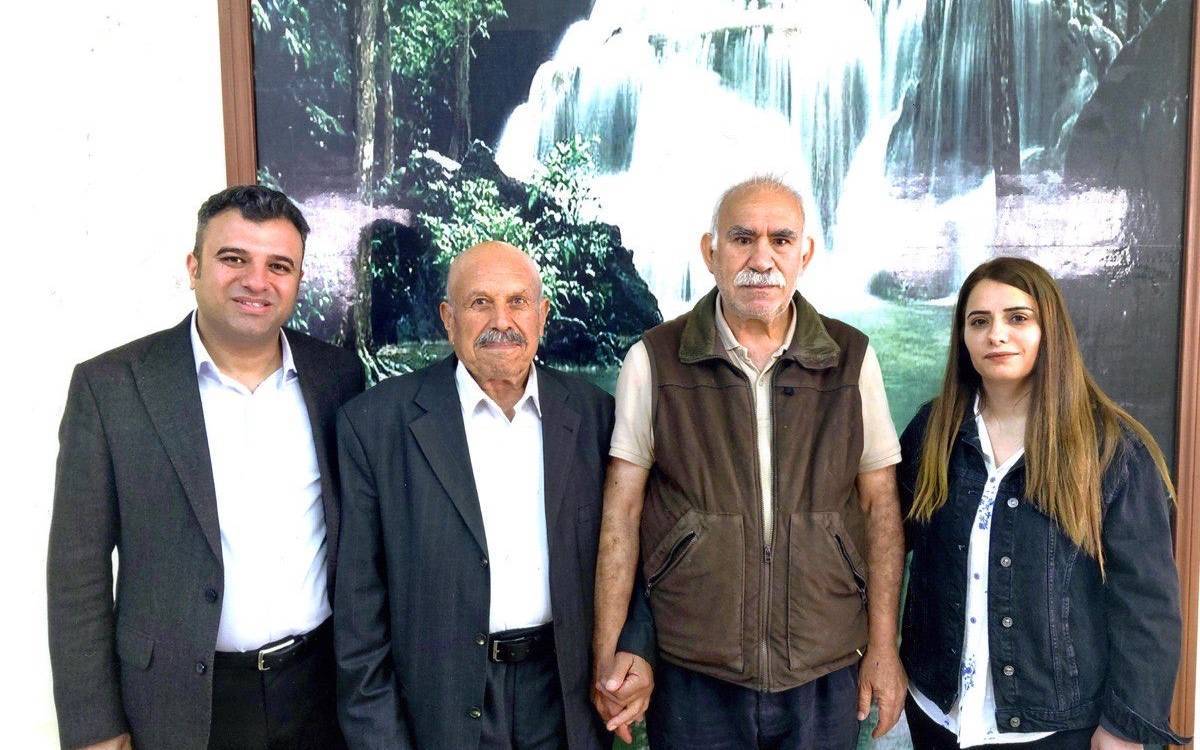



The pro-Kurdish Peoples’ Equality and Democracy Party (DEM Party) İmralı delegation issued a statement today sharing Abdullah Öcalan’s assessments of his prison conditions and the ongoing process.
Delegation members Pervin Buldan, Mithat Sancar and Özgür Faik Erol travelled to İmralı Island yesterday (November 22) to meet with Öcalan.
The delegation said it had observed that Öcalan had moved to newly built accommodation within the prison, describing the change as positive for his working and living conditions.
The statement called for communication facilities that would allow Öcalan to present his work over the past two years directly to the public:
‘What is needed now is to establish the means of communication that will allow Mr Öcalan personally to present to the press and the public, in its entirety, his extensive work over the past two years on the historical coexistence of Turks and Kurds and on peace.’
The delegation also stressed that the bodies envisaged under the framework law needed to become operational and that the process needed a legal basis. It said Öcalan remained determined to continue his work as ‘coordinator for peace and politicisation’.
‘Strengthening the process through democratic law and free politics’
The delegation also shared Öcalan’s assessments during the meeting.
Öcalan said Turkey stood at a threshold that could mark a turning point in the history of the Republic, while drawing attention to the risks facing the process.
He said politics should not become trapped in a cycle of ‘pressure, provocation and reaction’, warning that this could create space for undemocratic forces.
Arguing that attempts to undermine the process could emerge, Öcalan said:
‘Because this process, which we are conducting with great care, holds the potential for profound transformation in the country and the region, various forces will always attempt to put disruptive plans into action. The most effective measure against them is to strengthen the process through democratic law and free politics.’
‘The Kurdish question is a matter of democracy’
Öcalan linked the resolution of the Kurdish question to Turkey’s democratisation.
He argued that efforts towards a resolution would benefit all political and social groups in Turkey, not only Kurds, and said democratic politics should proceed on the basis of principles:
‘I regard the Kurdish question as a matter of democracy. Making a historic attempt to resolve such a question is in the interests of every political and social group in Turkey, and against the interests of racist mindsets and coup-making activities.’
Öcalan said democratic politics should not be confined to day-to-day developments and should rest on a consistent programme of principles.
Emphasis on a democratic republic and equal citizenship
Öcalan argued that Kurdish participation in the Republic must take place on a secure and democratic footing.
‘Justice, the rule of law and democracy are the demands not only of Kurds but of all the people of Turkey. Kurds favour peace and fraternity and fully embracing the Republic. Kurdish participation in the Republic can take place on a secure democratic footing. Such a republic can exist by recognising all identities. Those who are uncomfortable with this and favour a narrower republic operate on the principle of “let it be small, as long as it is mine”. A democratic republic, however, would strengthen Turkey and make it a model.’
Öcalan said a democratic understanding of the Republic that guaranteed the rights of all identities would strengthen Turkey and could serve as a model for the region.
Criticism of prison practices
Öcalan criticised deaths in prisons, delays in prisoners’ release and inconsistent practices across prisons. ‘In particular, deaths in prisons, the denial of conditional release and the implementation of different practices in different prisons constitute a provocation against the process,’ he said.
Linking the building of a democratic society to the demands of different peoples and faith groups for freedom and equality, Öcalan stressed the importance of guaranteeing cultural rights:
‘We take as our basis a society in which people can freely practise their culture, confidently exercise their rights and secure these through democratic principles and institutions.’
Öcalan argued that Kurds should receive legal guarantees recognising them as ‘a fundamental founding constituent’. He said they sought a democratic republic together with all democratic groups that embraced this approach.