









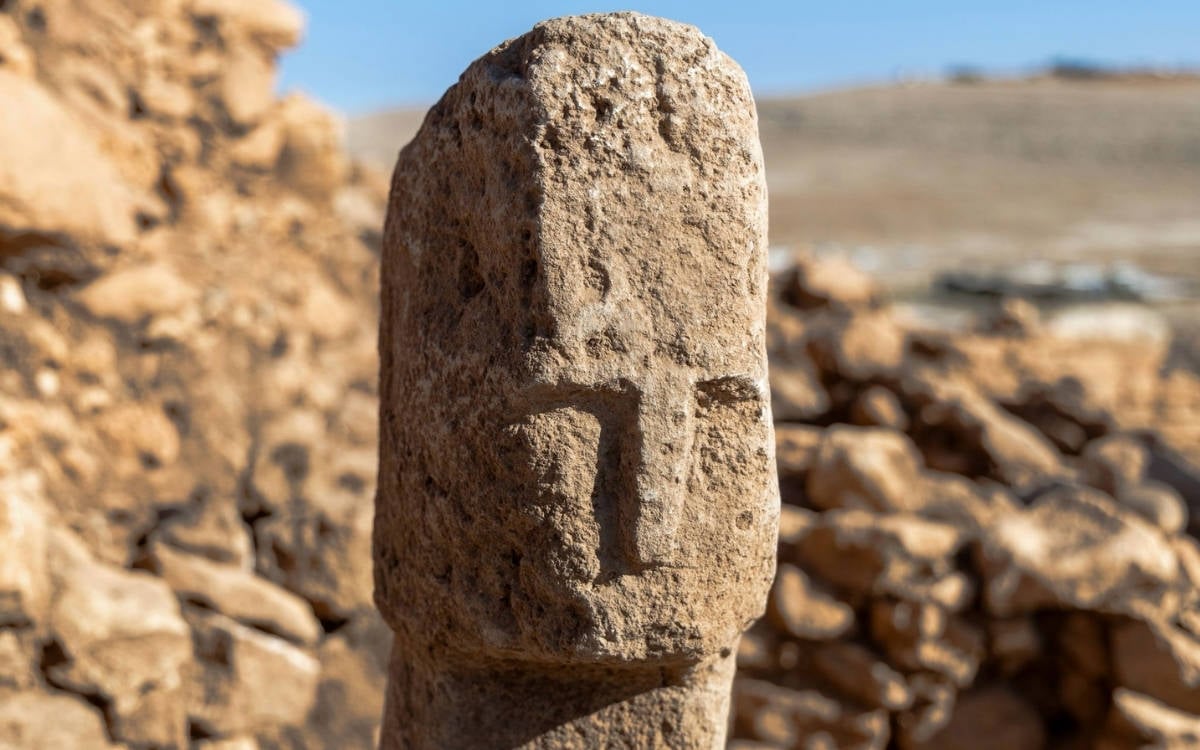



Minister of Culture and Tourism Mehmet Nuri Ersoy announced that a T-shaped pillar featuring a human face has been uncovered at the archaeological site of Karahantepe in Urfa.
Ersoy stated that the pillar sheds light on human history as the first known example of a Neolithic person depicting themselves on a T-shaped column.
Ersoy stated, “With its sharp facial features, deep eye sockets, and prominent nose, this face carries a gaze that stretches from 12,000 years ago to the present,” emphasizing that each discovery in the region makes humanity’s shared past more visible and that they continue to share this heritage with the world.
“The discovery reveals the Neolithic human’s capacity for abstract thought.”
According to the ministry’s statement, the 2025 excavations under the Stone Hills Project are ongoing at 10 different sites in Göbeklitepe and its surroundings, with T-shaped pillars being unearthed. The new finding at Karahantepe is considered a major milestone in Neolithic research.
The facial carving on the top of the pillar, with its sharp features, deep eye sockets, and broad nose, resembles other human statues at Karahantepe.
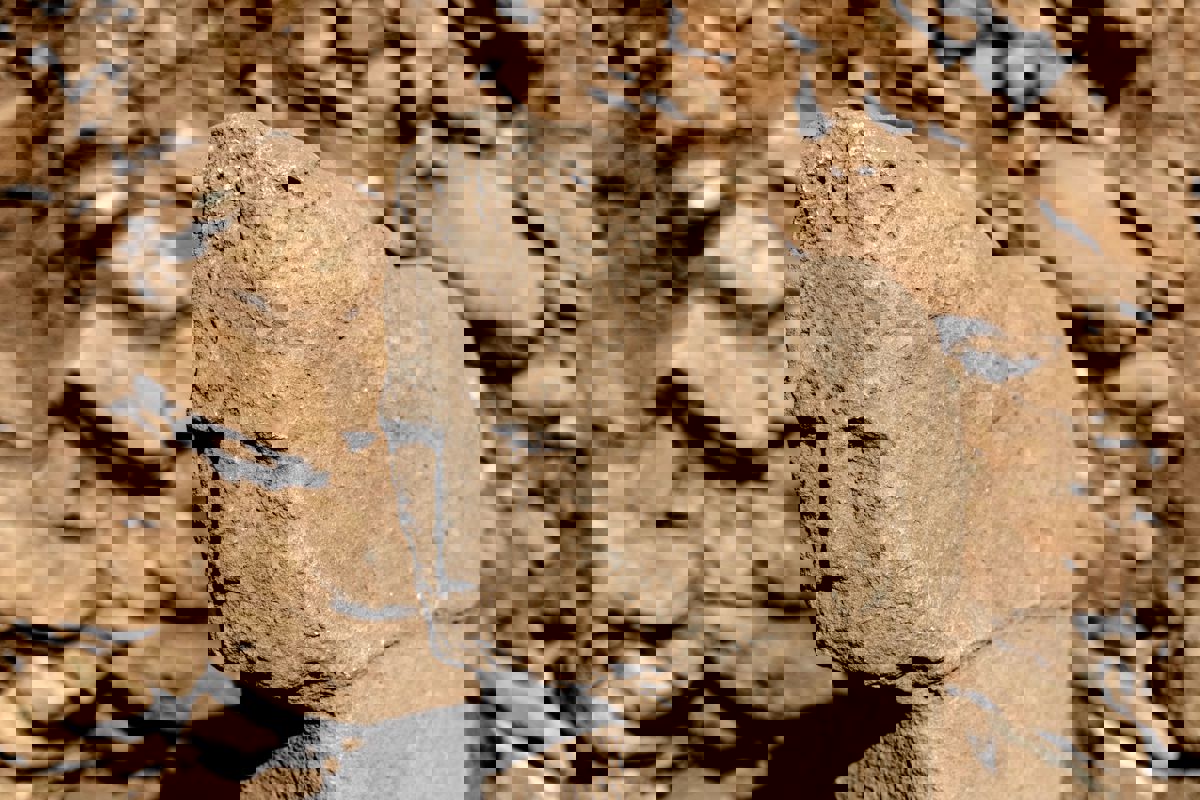
This discovery highlights the technical skill, forms of self-expression, and abstract thinking ability of Neolithic humans.
It has long been known that the T-shaped pillars symbolized humans; however, the carving of facial features on this stone indicates that, for the first time, a human is depicted directly.
The Stone Hills Project, dating back approximately 12,000 years, stands out as one of the most comprehensive archaeological initiatives documenting humanity’s transition to settled life and the transformations in their belief systems.
(TY/MH)

