









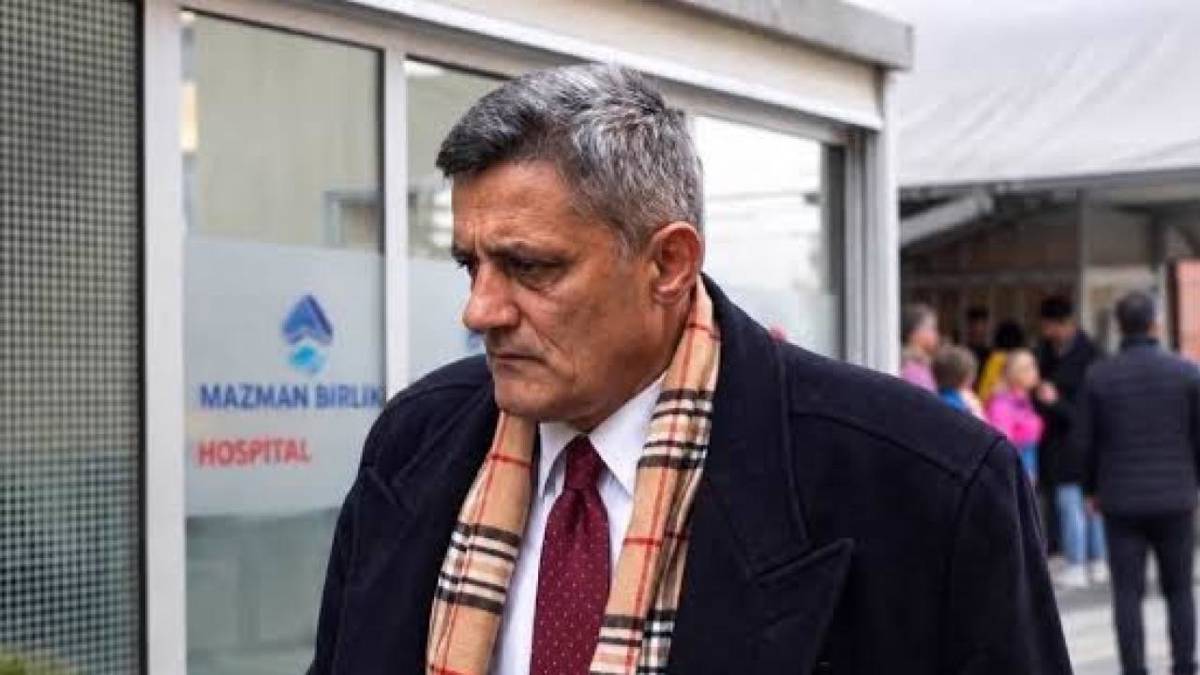



Prosecutors earlier this month reopened an investigation into the 2011 death of former National Intelligence Organization (MİT) officer Kaşif Kozinoğlu. The renewed probe covers his medical treatment, prison officials, former cellmates, journalists and people linked to the popular television series Kurtlar Vadisi Pusu (Valley of the Wolves: Ambush).
Kozinoğlu died on Nov 12, 2011, at the age of 55 while being held in Silivri Prison on espionage-related allegations. He had reportedly felt chest tightness and could not be saved despite medical intervention. The cause of his death was recorded as heart attack.
As of Sep 28, nine people were remanded in custody in connection with Kozinoğlu's death, while his two former cellmates were under house arrest. Authorities have also exhumed his body for new forensic examinations.
The original forensic investigation attributed Kozinoğlu’s death to chronic ischemic heart disease and found no evidence of poisoning. The reopened investigation has not produced a publicly available finding establishing that he was killed.
'Ergenekon' trials
Kozinoğlu had been detained on Mar 10, 2011, after returning from Afghanistan and appearing before prosecutor Zekeriya Öz, who led the Ergenekon investigations at the time.
The Ergenekon trials, which at time resulted in the purge of numerous military officers and bureaucrats on various allegations including plotting a coup agaist the government. The cases were dropped in 2019 as a plot against the army by the Fetullah Gülen cult, the group behind the 2016 coup attempt, to promote its members in the military.
Öz fled the country in 2015 after an investigation was launched against him over his links to the the Gülen group.
In 2011, Öz had accused Kozinoğlu of being a member of the "Ergenekon" organization. He had alleged that Kozinoğlu leaked classified documents to the Odatv news site.
Kozinoğlu died before presenting his defense at the main Odatv trial.
In 2017, the 13 remaining defendants in the case were acquitted after a court found that the alleged offenses had not been proven.
The investigation into Kozinoğlu’s death was closed with a decision not to prosecute on Apr 10, 2012.
In August, Justice Minister Akın Gürlek announced on Aug 26 that a review by the ministry’s department investigating unsolved killings led an İstanbul judge to overturn that decision.
A special team was then established to investigate the case, with access to the case file restricted. Kozinoğlu’s grave in İstanbul’s Ümraniye district was opened, and forensic specialists collected bone, soil and other samples to examine his cause of death and possible third-party involvement. No final results from those examinations have been made public.
The investigation initially focused on personnel who were working at the prison when Kozinoğlu died. Ten people were taken into custody in the first operation, including a former gendarmerie conscript who was subsequently remanded. Seven others were released under judicial supervision and two by prosecutors. Another suspect, who authorities said was abroad, was not apprehended.
A second operation expanded the inquiry to the medical response to Kozinoğlu’s illness and news coverage of him before his imprisonment.
Emergency medical technicians Özlem Uslu Öz and Emre Atmaca were remanded on allegations of intentional killing. Other medical personnel and ambulance drivers were released under judicial supervision.
Atmaca’s defense said he had been working in the job for only two months, did not know Kozinoğlu’s identity and requested a doctor-equipped team after realizing the seriousness of the emergency.
Journalist detained
Journalist Selahattin Günday was also remanded over reporting and images identifying Kozinoğlu outside the Beşiktaş courthouse in Mar 2011. He faces allegations related to disclosing intelligence information and unlawfully obtaining or disseminating personal data. A second remand order was later issued against him on an allegation of establishing a criminal organization.
Günday’s lawyers have challenged the proceedings, arguing that he did not record the footage in question, that Kozinoğlu’s identity and expected courthouse appearance were already public, and that the version of the intelligence law cited against him took effect after the alleged conduct. The Turkish Journalists’ Association has called for his release.
The inquiry has also reached officials involved in the original investigation. Ali İşgören, the Silivri chief public prosecutor at the time of Kozinoğlu’s death, and Necip Doğan, then a prison prosecutor, were remanded on allegations of membership in a criminal organization.
Former journalist Osman Arslan was remanded on allegations of membership in a criminal organization and disclosing protected information for political or military espionage.
Former intelligence official Enver Altaylı, already imprisoned in another case related to his links to the Gülen group, received a new remand order on an allegation of instigating intentional killing. Former police chief Bayram Özbek was also remanded on allegations that include instigating intentional killing and establishing or leading an armed terrorist organization. His detention brought the reported number of people remanded in the reopened investigation to nine.
Investigators have separately questioned Kozinoğlu’s former cellmates, retired naval captain Hasan Ataman Yıldırım and retired gendarmerie colonel Hasan Atilla Uğur, on allegations of intentional killing. Both were placed under house arrest.
Prosecutors questioned Uğur about a sublingual tablet he said he gave Kozinoğlu after Kozinoğlu complained of chest tightness. They also asked about surveillance footage said to show Uğur entering Kozinoğlu’s room and Yıldırım later leaving the room with a cup.
Uğur denied involvement or negligence and said he could not remember several details. His lawyers said he had urgently sought medical assistance and alleged delays by prison personnel. The published questions do not establish that the tablet or cup contained poison.
The medical response
The medical response on Nov 12, 2011, is another focus of the inquiry. A timeline attributed to official records says Kozinoğlu entered his room at 5.56 pm and his cellmates entered shortly afterward. The corridor call-button light was activated at 6.08 pm.
Kozinoğlu was taken by stretcher to the prisoner reception entrance at 6.25 pm. An ambulance arrived at the prison at 6.37 pm, and he reached Silivri State Hospital at 7.10 pm. His death was formally recorded at 7.30 pm.
Gürlek has said Kozinoğlu was already dead when he reached the hospital.
The original investigation found no evidence of poisoning and concluded that the available evidence did not establish culpable delay, negligence or third-party responsibility. Those findings are now being re-examined.
Kurtlar Vadisi Pusu series
The inquiry has also turned to Kurtlar Vadisi Pusu, a popular television series touching on current affairs at the time, because of a fictional intelligence officer named Kazım Kaşifoğlu, widely believed to have depicted Kozinoğlu.
An episode broadcast on Nov 10, 2011, two days before Kozinoğlu died, depicted Kaşifoğlu being held captive and threatened with death. Also, in the episode, a character named Kara apparoaches Polat Alemdar, the lead character, in the disguise of an imam, and tells him, "I prayed for [Kaşifoğlu], it's up to you to bury him."
The next episode of the series was aired nearly a month after Kozinoğlu's death. In that episode, Kaşifoğlu was detained and sent to prison. He feels unwell when doing exercises and killed by an injection by Kara.
Prosecutors are examining allegations concerning the character’s portrayal and whether the series contained propaganda, concealed messages or organizational instructions. The allegations have not established that the series communicated an order to kill Kozinoğlu.
Screenwriters Raci Şaşmaz, Bahadır Özdener and Cüneyt Aysan have given statements as people with relevant information. They denied receiving outside instructions or pressure and described the parallels between the series and Kozinoğlu as coincidental.
Actors Emin Olcay and Sedat Savtak have also been questioned as witnesses or information-holders. Pana Film director İhsan Karademir was questioned as a suspect and released with an international-travel ban on Sep 27.
Doctor found dead
Investigators are also examining a theft at the Forensic Medicine Institute shortly after Kozinoğlu’s death. A person identified only as G.E., who is already serving sentences in unrelated cases, was questioned over whether biological samples could have been substituted. The investigation has not established that the samples were tampered with.
Another development concerned Dr. Turgay Tamer, 66, who was found dead at his home in İstanbul’s Büyükçekmece district on Sep 27 after being questioned in the reopened investigation and released with a foreign-travel ban.
The Silivri prosecutor’s office said Tamer had been a prison campus doctor, not a forensic pathologist, and had not been informed about Kozinoğlu’s deteriorating condition or treated him during the episode. His body was taken to the Forensic Medicine Institute to determine the cause of death. No cause of death or connection between his death and the Kozinoğlu investigation has been established. (VK)


