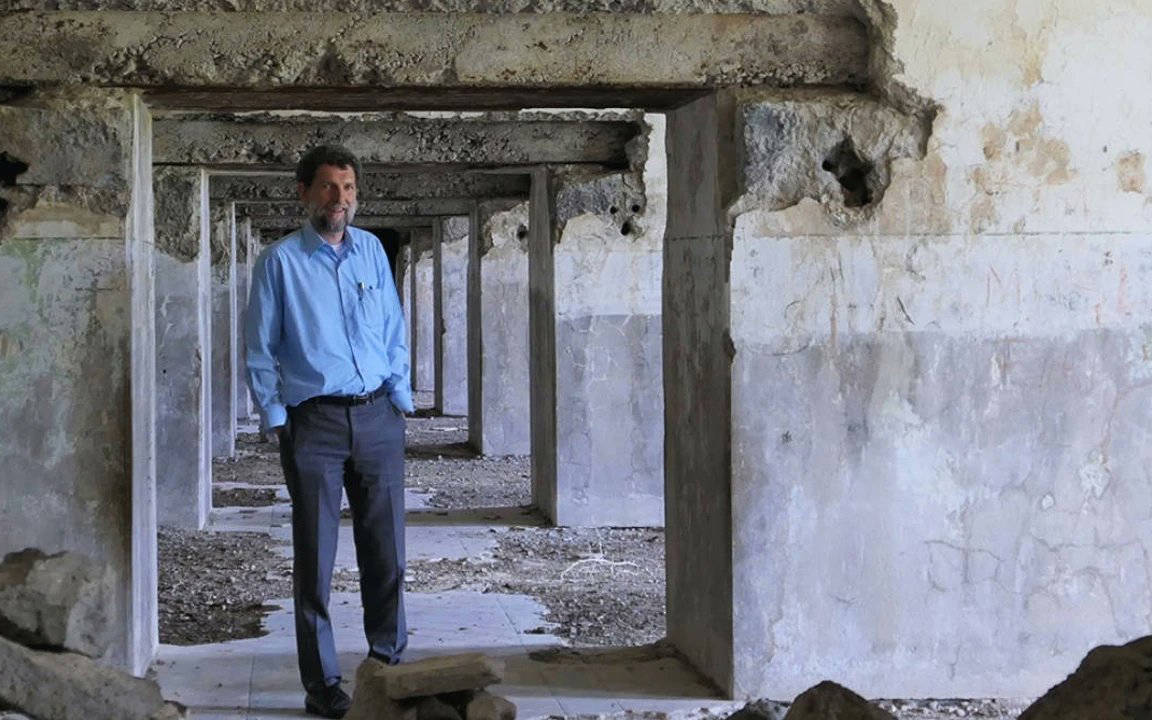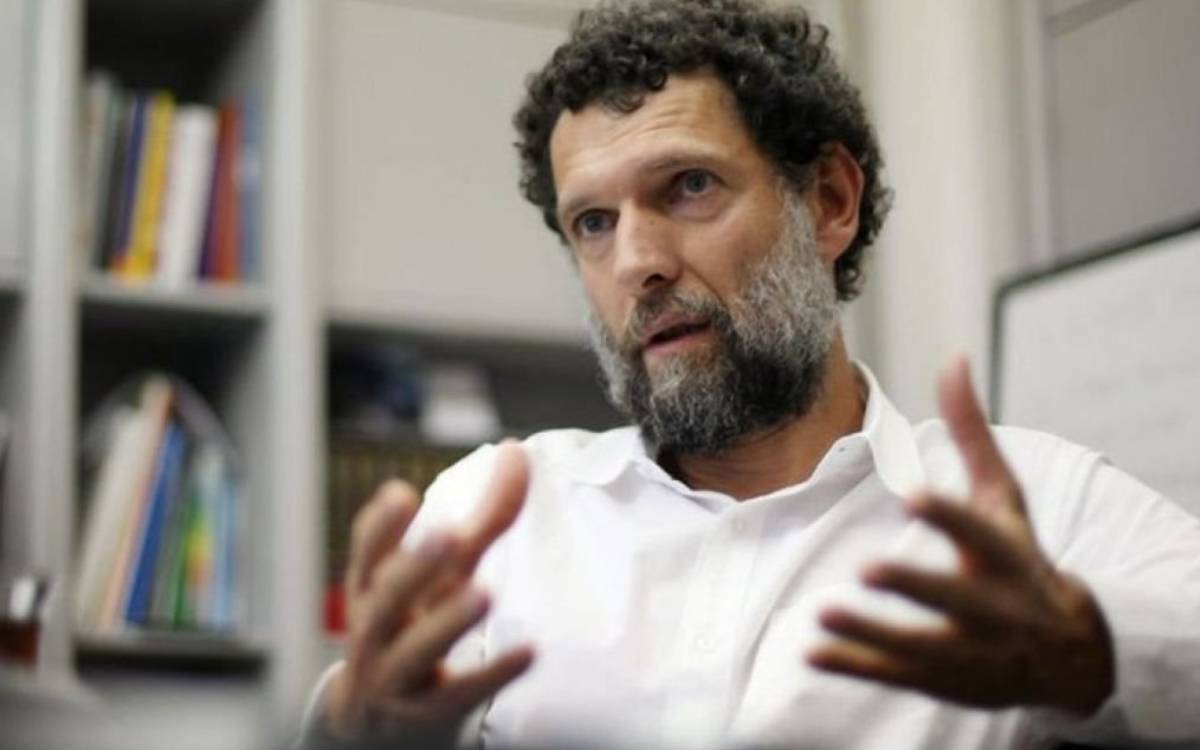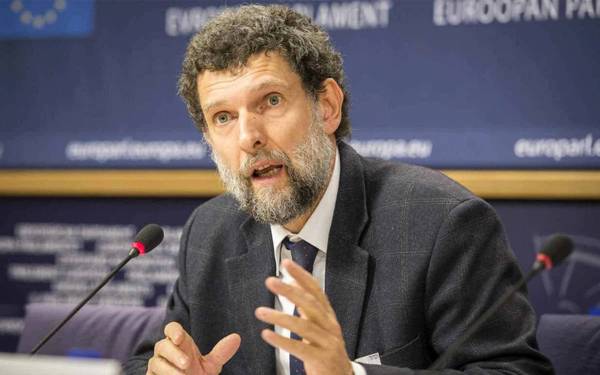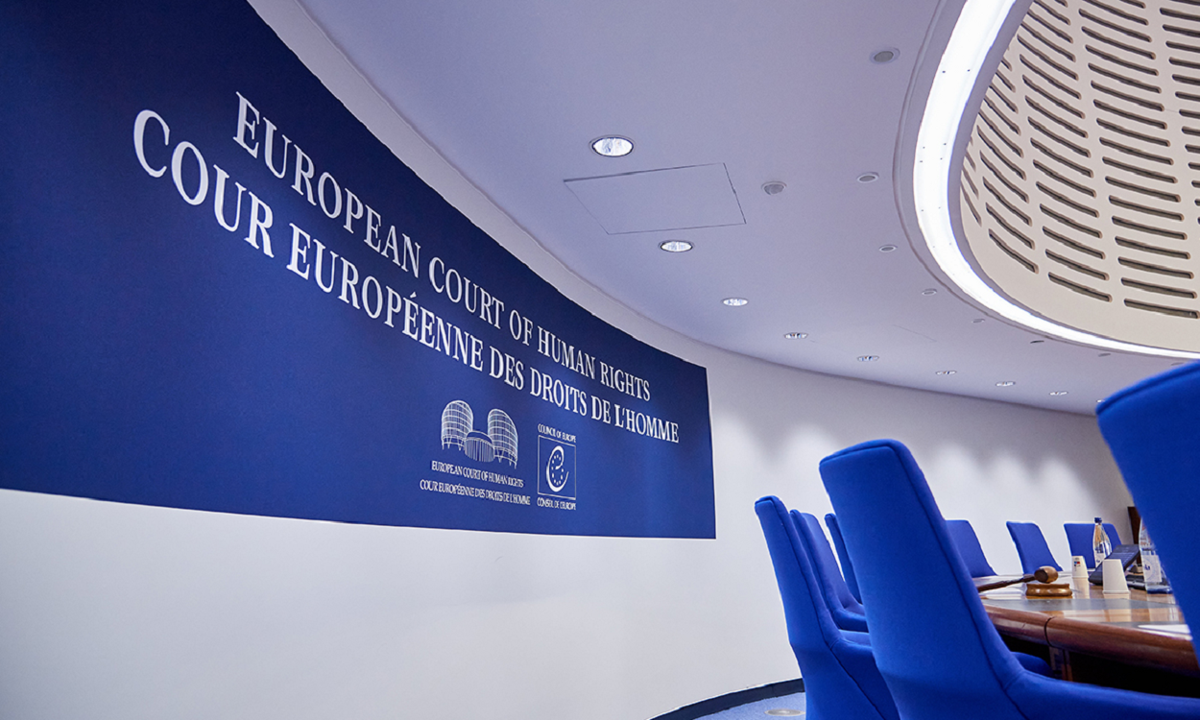



The 17-judge Grand Chamber of the European Court of Human Rights (ECtHR), in its Aug. 25, 2026 judgment in Kavala v. Türkiye (No. 2), examined as a whole the criminal proceedings against Osman Kavala, his continued deprivation of liberty after 2019, his conviction in the Gezi Park trial and the aggravated life sentence imposed on him.
The judgment, concerning application no. 2170/24, involves a different legal examination from the ECtHR’s two earlier rulings concerning Kavala. This time, the Grand Chamber did not confine itself to whether those previous judgments had been executed. It directly examined the fairness of the criminal proceedings that resulted in Kavala’s conviction, the interference with his freedoms of expression and peaceful assembly, the lawfulness of his deprivation of liberty after 2019 and the nature of his aggravated life sentence.
By 15 votes to 2, the Grand Chamber found violations of:
- Article 10 of the European Convention on Human Rights, which protects freedom of expression;
- Article 11, which protects freedom of peaceful assembly;
- Article 6 § 1, concerning the right to a fair hearing before an independent and impartial tribunal;
- Article 5 § 1, concerning the right to liberty and security;
- Article 18, which prohibits restrictions on Convention rights from being applied for purposes other than those prescribed, taken together with Articles 5 § 1, 6 § 1, 10 and 11;
- Article 3, because the aggravated life sentence offered no prospect of conditional release and no mechanism for reviewing whether continued imprisonment remained justified.
As a Grand Chamber judgment, the ruling is final. The court held that Turkey must secure Kavala’s release “at the earliest possible date,” eliminate all consequences of his conviction and take both individual and general measures to prevent similar violations. It also stated that the conviction should be regarded as “null and void” from the perspective of Convention law.
Three separate Strasbourg proceedings concerning the same case
To understand Kavala v. Türkiye (No. 2), it is necessary to distinguish between three separate proceedings before the ECtHR.
The first Kavala judgment in 2019
In its first Kavala v. Turkey judgment of Dec. 10, 2019, the ECtHR examined Kavala’s pre-trial detention in connection with the Gezi Park events and the attempted coup of July 15, 2016.
The court found that there had been no reasonable suspicion that Kavala had committed the offenses attributed to him. It noted that the accusations were based to a large extent on activities protected by the Convention, including human rights advocacy, civil society work and contacts with journalists, non-governmental organizations and international bodies.
The ECtHR found violations of Articles 5 § 1 and 5 § 4, as well as Article 18 taken together with Article 5 § 1. It concluded that Kavala’s detention had pursued an ulterior purpose not prescribed by the Convention: silencing him as a human rights defender. It indicated that Turkey was required to end his detention and secure his immediate release.
That judgment became final on May 11, 2020, and was transmitted to the Council of Europe’s Committee of Ministers, which is responsible for supervising the execution of ECtHR judgments.
The infringement proceedings in 2022
After Kavala was not released, the Committee of Ministers initiated infringement proceedings against Turkey under Article 46 § 4 of the Convention on Feb. 2, 2022. This exceptional procedure asked the ECtHR to determine whether Turkey had failed to comply with the binding 2019 judgment.
On July 11, 2022, the Grand Chamber held that Turkey had failed to fulfill its obligation under Article 46 § 1 to abide by the earlier ruling. The court found that the later charges against Kavala were not based on substantially new facts. Instead, they involved the reclassification under different criminal provisions of evidence that the ECtHR had already examined and found insufficient.
The 2022 ruling was not a judgment on the merits of a new individual application. Its subject was whether the 2019 judgment had been executed in good faith.
The 2026 Kavala No. 2 judgment
Kavala filed a new individual application with the ECtHR on Jan. 18, 2024, concerning developments after the 2019 judgment.
The application was initially allocated to the court’s Second Section. On Dec. 16, 2025, a Chamber of that section relinquished jurisdiction in favor of the Grand Chamber under Article 30 of the Convention. The Grand Chamber held a public hearing on March 25, 2026, and delivered its judgment on Aug. 25, 2026.
This new case went beyond the question of executing the earlier judgments. It directly concerned Kavala’s conviction, the proceedings as a whole and his continuing deprivation of liberty.
The domestic proceedings
Kavala has been continuously deprived of his liberty since Oct. 18, 2017.
He was initially suspected of attempting to overthrow the government by force and violence in connection with the Gezi Park events, under Article 312 of the Turkish Criminal Code, and of attempting to overthrow the constitutional order in connection with the July 15 coup attempt, under Article 309.
On Feb. 18, 2020, the İstanbul 30th Assize Court acquitted Kavala and eight co-defendants in the Gezi Park trial and ordered his release. The court found that the intercepted telephone conversations were not legally admissible evidence, that the report by the Financial Crimes Investigation Board, or MASAK, did not substantiate the allegation that Kavala had financed the protests, and that there was insufficient concrete and conclusive evidence to convict him.
The release order did not result in Kavala’s actual release. He was taken into police custody on the same day and placed in pre-trial detention the following day under Article 309. On March 9, 2020, he was again placed in pre-trial detention, this time on a charge of political or military espionage under Article 328.
The acquittal was set aside by the İstanbul Regional Court of Appeal on Jan. 22, 2021. After a succession of decisions joining, severing and transferring proceedings between different assize courts, the İstanbul 13th Assize Court convicted Kavala under Article 312 on April 25, 2022, and sentenced him to aggravated life imprisonment. It acquitted him of espionage.
The conviction was upheld by the İstanbul Regional Court of Appeal on Dec. 28, 2022, and by the Court of Cassation on Sept. 28, 2023.
Kavala’s complaints and the government’s response
Before the ECtHR, Kavala argued that:
- his deprivation of liberty had been arbitrarily continued after the 2019 judgment;
- the same facts had repeatedly been used under different criminal classifications;
- activities protected by the Convention had been treated as evidence of serious crimes;
- his conviction had no foreseeable legal basis;
- he had not been tried by an independent and impartial tribunal;
- important defense witnesses had not been heard and central defense arguments had not been effectively examined;
- the aggravated life sentence provided no prospect of release or review;
- the investigation, continued pre-trial detention and conviction had been used to punish and silence him.
The government first argued that the application was premature because two individual applications lodged by Kavala were still pending before Turkey’s Constitutional Court.
On the merits, the government maintained that Kavala had not been prosecuted for peaceful civil society work, but for allegedly organizing, directing and financing the Gezi Park events and for his purported connection with the violence that occurred during the protests. It argued that Article 312 was clear and foreseeable, that the domestic courts had lawfully assessed the evidence, that the case had been heard by independent and impartial courts, and that his deprivation of liberty following conviction was based on a judgment delivered by a competent court.
Kavala was not required to wait for the Constitutional Court
Under Article 35 § 1 of the Convention, applicants must normally exhaust available and effective domestic remedies before applying to the ECtHR. The rule is intended to give national authorities the first opportunity to prevent or remedy an alleged violation.
The Grand Chamber reaffirmed that an individual application to Turkey’s Constitutional Court remains, in principle, an effective domestic remedy. The judgment therefore does not establish that the Constitutional Court procedure is generally ineffective.
However, the ECtHR considered the exceptional circumstances of Kavala’s case:
- He had been continuously deprived of his liberty for more than eight and a half years.
- He had consistently and diligently used the available ordinary and extraordinary remedies.
- The binding ECtHR judgments of 2019 and 2022 had not been implemented.
- The domestic acquittal and release order had produced no practical result.
- His Constitutional Court application of June 9, 2022, had remained pending for more than four years.
- His second application, filed on Oct. 24, 2023, had remained pending for more than two years and nine months.
- The first application had been placed on the Constitutional Court’s plenary agenda on July 25, 2023, but its examination had immediately been adjourned.
The Grand Chamber found that these delays were manifestly excessive in the particular context of the case, in which individual liberty was at stake and binding ECtHR judgments remained unexecuted.
The Constitutional Court’s “procedural inertia,” it held, had reduced the protection available at the domestic level to a theoretical and illusory right, offering at best an uncertain prospect of redress and no reasonable prospect of a timely examination.
Kavala therefore could not be criticized for applying to Strasbourg without waiting for those proceedings to conclude. The Grand Chamber expressly limited this finding to the particular circumstances of the case and did not call into question the general effectiveness of individual applications to the Constitutional Court.
The ECtHR also referred to the refusal of lower criminal courts to execute Constitutional Court judgments concerning Şerafettin Can Atalay and Tayfun Kahraman. It stressed that implementation is an indivisible part of the right of individual application, and that rendering binding Constitutional Court judgments ineffective has serious consequences for the rule of law, legal certainty and the judicial protection of fundamental rights.
By contrast, the complaint that the criminal proceedings as a whole had lasted an unreasonably long time was declared inadmissible. The ECtHR found that amendments adopted in 2024 had introduced a direct application to the Compensation Commission and that Kavala was required to use that remedy for his reasonable-time complaint.
Lawful civil society work cannot be treated as the element of a grave offense
The ECtHR examined Articles 10 and 11, concerning freedom of expression and freedom of peaceful assembly, together.
The Grand Chamber found that a substantial part of the conduct attributed to Kavala consisted of:
- participating in public debate;
- supporting civil society initiatives;
- facilitating meetings;
- documenting alleged human rights violations;
- disseminating information and opinions on matters of public interest;
- meeting academics, journalists, diplomats and international organizations;
- criticizing the use and export of tear gas;
- organizing cultural events and documentary projects;
- providing material, logistical or intellectual support for peaceful demonstrations.
By their nature, the court said, these activities fell within the protection of freedom of expression and peaceful assembly.
The Grand Chamber emphasized the particular role of human rights defenders and civil society organizations in a democratic society. An NGO working on matters of public interest performs a “public watchdog” function comparable in importance to that of the press and is therefore entitled to similar protection.
The government argued that the violence occurring during the Gezi Park events placed Kavala’s activities outside the protection of the Convention. The court rejected this argument.
Under the ECtHR’s case law, an individual does not lose the protection of the right to peaceful assembly merely because other people commit sporadic acts of violence during a demonstration, provided that the individual remains peaceful in their own intentions and conduct.
The domestic courts had not established that Kavala had personally participated in violence, incited violence or accommodated himself to violent acts.
Article 312 was extended in an unforeseeable manner
Article 312 of the Criminal Code requires an attempt to overthrow the government, or prevent it from performing its functions, through force and violence.
The domestic courts, however, did not establish that Kavala:
- personally committed an act of violence;
- gave an order or instruction to use violence;
- called for violence;
- had a direct causal connection to any specific violent incident.
Instead, the conviction was based on the assumption that Kavala had played a “strategic,” “structuring” or decisive role in planning, organizing and directing the Gezi Park movement. Acts of violence committed by third parties were indirectly attributed to him without proof of a direct or intentional link.
According to the Grand Chamber, the domestic courts replaced an examination of Kavala’s individual criminal responsibility with a global assessment of his civil society work and the Gezi Park events as a whole.
Activities that were not in themselves criminal and were protected by the Convention were treated as constituting the material element of an exceptionally serious offense punishable by aggravated life imprisonment.
The domestic courts’ reliance on case law from military interventions and armed contexts to assess a civilian’s conduct in relation to demonstrations and civil society work was also unforeseeable, the Grand Chamber found.
The ECtHR placed particular weight on the absence of any causal connection between the violence that occurred during the Gezi Park events and the acts personally attributed to Kavala. The national authorities had not established, or even attempted to establish, such a connection.
Article 312 had therefore been applied to Kavala in a manner that unforeseeably extended its scope and failed to provide the minimum protection required against arbitrary interference. The interference with his rights could not be regarded as “prescribed by law” under Articles 10 and 11.
Having reached that conclusion, the Grand Chamber did not consider it necessary to examine separately whether the interference pursued a legitimate aim or was necessary in a democratic society. It found violations of Articles 10 and 11.
A chilling effect on civil society
The ECtHR found that exposing people who provide logistical, financial or intellectual support for peaceful protests to the possibility of aggravated life imprisonment would have a chilling effect not only on human rights defenders and civil society groups, but on all citizens wishing to participate in public debate or peaceful demonstrations.
The approach taken by the domestic courts created a risk that limited violence on the margins of a protest could later be attributed to an entire social movement and those who supported it. The Grand Chamber found that such a result was incompatible with the pluralism, tolerance and broadmindedness that characterize a democratic society.
The proceedings as a whole were unfair
The ECtHR considered Kavala’s fair-trial complaints by examining the proceedings as a whole and the cumulative effect of the shortcomings it identified.
The Grand Chamber recalled that it does not act as a court of fourth instance and does not ordinarily replace the domestic courts’ assessment of evidence with its own.
However, where criminal law is applied in a manifestly arbitrary manner, decisive defense arguments are left unanswered and the outcome becomes manifestly unreasonable, the issue is no longer merely one of interpreting domestic law. It falls within the scope of Article 6.
Defects identified in 2019 were never remedied
In its 2019 judgment, the ECtHR had found the accusations against Kavala manifestly implausible and held that there had been no reasonable suspicion justifying his detention.
At the trial stage, the domestic courts were therefore required to demonstrate that those initial defects had been remedied by new, solid and probative evidence. They needed to explain concretely how Kavala’s conduct had caused, encouraged or made possible the violence in question.
The Grand Chamber found that they had failed to do so:
- The core allegations remained unchanged.
- No new and decisive evidence was produced.
- No concrete link was established between Kavala’s activities and acts of violence.
- The element of force and violence required by the offense was not individualized.
- It was not demonstrated that Kavala had intended to overthrow the government by force and violence.
The Feb. 18, 2020 acquittal had found that the telephone interceptions were not legally admissible, that the MASAK report did not support the financing allegation and that there was no sufficient, concrete and conclusive evidence for a conviction.
The later judgments convicting Kavala did not present new evidence or persuasive legal reasoning capable of overcoming those findings.
Defense witnesses were rejected on stereotyped grounds
Kavala’s lawyers asked the İstanbul 13th Assize Court to hear two former ministers who had been in office during the Gezi Park events. The defense argued that they could clarify the nature of Kavala’s contacts with public authorities and the dialogue conducted during the protests.
The court dismissed the request on the general ground that hearing the witnesses would “add nothing” to the proceedings. The Regional Court of Appeal and Court of Cassation did not effectively address this central defense complaint.
The Grand Chamber found that the refusal to hear important defense witnesses had been justified in a stereotyped manner and was not offset by adequate procedural safeguards or effective appellate review.
The burden of proof was effectively shifted to Kavala
The ECtHR found that the conviction rested largely on contextual and insufficiently individualized inferences rather than concrete acts personally attributable to Kavala.
Instead of requiring the authorities to establish the material and mental elements of the offense beyond reasonable doubt, the proceedings effectively placed the burden on Kavala to refute broad assumptions and the prosecution’s general narrative.
All violence during the Gezi Park events was attributed to him, even though the people accused of direct involvement in violence in other proceedings had been acquitted. The ECtHR also criticized the domestic court’s analogy with the deployment of tanks during the military-led Feb. 28, 1997 process, which concerned an entirely different military and political context.
The Grand Chamber concluded that criminal law had been interpreted arbitrarily and unforeseeably to Kavala’s detriment, producing a manifestly unreasonable outcome.
Legitimate doubts over the courts’ independence and impartiality
In examining independence and impartiality, the ECtHR considered not only whether individual judges had demonstrated personal bias, but also whether the proceedings could give an objective observer legitimate grounds for doubt.
The Grand Chamber highlighted several factors:
- A disciplinary investigation was opened by the Council of Judges and Prosecutors against the three judges who acquitted Kavala and ordered his release, one day after the decision.
- The case was repeatedly transferred between different assize courts.
- Proceedings were joined, severed and reassigned on several occasions.
- A judge with previous close links to the ruling party participated at the decisive stage of the trial.
- Senior state officials made public statements portraying Kavala as guilty before the proceedings had concluded.
- Essential defense arguments were not adequately examined.
- The case unfolded against a broader background of structural problems relating to the appointment, transfer and discipline of judges.
The fact that no disciplinary sanction had ultimately been imposed on the judges who acquitted Kavala did not alter the ECtHR’s assessment. Opening the investigation immediately after the acquittal was, by its nature, capable of exerting a deterrent pressure on those judges and, more broadly, undermining judicial independence in the later proceedings.
The Grand Chamber did not conclude that the entire Turkish judiciary acted under instructions from the executive. It nevertheless found that the case-specific circumstances, public statements by senior officials and wider structural conditions gave rise to objectively justified and legitimate doubts about the independence and impartiality of the courts that examined Kavala’s case.
The shortcomings were not isolated procedural errors. Taken together, they affected both the fairness of the proceedings and the guarantees of judicial independence and impartiality, fundamentally impairing the very essence of Kavala’s right to a fair trial.
The ECtHR therefore found a violation of Article 6 § 1.
The entire period of deprivation of liberty since 2019 was unlawful
For its examination under Article 5 § 1, the Grand Chamber divided the period following its first judgment into two stages:
- Kavala’s pre-trial detention between Dec. 10, 2019, and April 25, 2022;
- his deprivation of liberty following the first-instance conviction of April 25, 2022.
This distinction follows the autonomous meaning of terms under the Convention. Even before a conviction becomes final under domestic law, detention following a first-instance conviction is assessed by the ECtHR under Article 5 § 1 (a), concerning detention “after conviction.”
The pre-trial detention between 2019 and 2022 was arbitrary
The Grand Chamber found that after the 2019 judgment, the same evidence had been used under different criminal classifications without the addition of any substantially new facts.
Orders for release, or release in connection with particular accusations, had been deprived of practical effect by new arrest and detention measures based on other charges.
According to the court, the domestic authorities:
- failed to demonstrate a strong suspicion that Kavala had committed an offense;
- failed to provide relevant and sufficient reasons for continuing the detention;
- did not properly consider alternatives such as judicial supervision;
- continued to rely on evidence that the ECtHR had already found insufficient.
The Grand Chamber found that the authorities had sought to circumvent the requirements of both domestic law and the Convention in order to keep Kavala in detention, and had acted in bad faith.
His pre-trial detention between Dec. 10, 2019, and April 25, 2022, was therefore arbitrary and violated Article 5 § 1.
The detention following conviction also lacked a lawful basis
As a general rule, the deprivation of liberty following a conviction by a competent court is permitted under Article 5 § 1 (a).
However, where a conviction results from proceedings amounting to a “flagrant denial of justice,” it cannot provide a valid basis for detention under the Convention.
This is an exceptionally high threshold. It is not met by every procedural defect or erroneous interpretation of domestic law. The unfairness must be so serious that it negates or destroys the very essence of the right to a fair trial.
The Grand Chamber held that this threshold had been reached in Kavala’s case. His conviction followed proceedings in which:
- the elements of the offense were not individualized;
- activities protected by the Convention were treated as evidence of criminal conduct;
- the criminal provision was extended in an unforeseeable manner;
- defense rights were rendered ineffective;
- guarantees of independence and impartiality were seriously undermined.
Kavala’s deprivation of liberty after April 25, 2022, could therefore not be regarded as lawful under Article 5 § 1 (a).
The ECtHR concluded that the entire period of Kavala’s deprivation of liberty from Dec. 10, 2019, until the date of the new judgment was incompatible with Article 5 § 1.
The proceedings and conviction pursued an ulterior purpose
Article 18 of the Convention prohibits restrictions permitted under the Convention from being applied for purposes other than those for which they were prescribed.
Article 18 does not operate independently. It is examined together with another Convention right. In this case, the Grand Chamber applied it not only in conjunction with the rights to liberty, expression and peaceful assembly, but also with the right to a fair trial.
The ECtHR held that judicial proceedings must never be used for an ulterior purpose that undermines the guarantees of Article 6.
No direct written instruction was required
The Grand Chamber noted that an ulterior purpose cannot always be demonstrated through a written instruction, an explicit order or one direct piece of evidence. Case-specific facts, the sequence of measures and the broader context may be assessed together.
The existence of an ulterior purpose nevertheless had to be established beyond reasonable doubt.
The court considered, among other factors:
- the failure to remedy the absence of reasonable suspicion identified in 2019;
- the repeated use of the same facts under different criminal classifications;
- the neutralization of acquittal and release decisions;
- the failure to execute binding ECtHR judgments;
- the failure to establish the material and mental elements of the offense;
- the use of protected civil society activity as incriminating evidence;
- serious doubts about the independence and impartiality of the courts;
- accusatory public statements by senior state officials;
- Kavala’s exceptionally prolonged, uninterrupted deprivation of liberty;
- the imposition of aggravated life imprisonment without establishing his personal involvement in violence.
The ECtHR found that Kavala’s case could not be regarded as an isolated incident. It had to be viewed in the wider context of political opponents, human rights defenders and journalists being detained and prosecuted on the basis of criminal accusations whose scope had been extensively interpreted or artificially magnified.
The Grand Chamber did not find that the Turkish judiciary as a whole lacked independence or that the domestic courts had acted under direct instructions from the executive. It also said that public statements by senior officials could not, on their own, establish an ulterior purpose.
Taken together, however, the circumstances demonstrated that the criminal proceedings had moved away from the stated purpose of addressing violence.
Kavala’s contacts with journalists, academics, civil society organizations, diplomats and international institutions, along with his participation in public debate and human rights work, had been placed at the center of the conviction.
The ECtHR found that the prosecution, continued pre-trial detention and conviction were predominantly motivated by an ulterior purpose: to punish Kavala for his role in the Gezi Park demonstrations and for expressing his opinions as a human rights defender, and to silence him.
This was not merely an incidental consequence of the measures. It was their predominant purpose.
The Grand Chamber therefore found a violation of Article 18 taken together with Articles 5 § 1, 6 § 1, 10 and 11.
An aggravated life sentence with no prospect of review
The ECtHR also examined Kavala’s aggravated life sentence under Article 3, which prohibits torture and inhuman or degrading treatment or punishment.
A life sentence is not in itself incompatible with the Convention. It must, however, offer a genuine prospect of release and provide a mechanism for reviewing whether continued imprisonment remains justified in light of:
- changes in the prisoner’s personal circumstances;
- progress toward rehabilitation;
- whether the prisoner continues to pose a danger to society.
Under Turkish law, no conditional release is available for the offense of which Kavala was convicted. Nor is there a mechanism allowing the sentence to be reviewed later on the basis of an individualized assessment.
The Grand Chamber reiterated that the incompatibility of an irreducible life sentence with Article 3 arises when the sentence is imposed, not only after the prisoner has served a particular number of years.
It therefore found that Kavala’s aggravated life sentence, with no possibility of conditional release or review, violated Article 3.
The government argued that Kavala had not raised this particular complaint before the Constitutional Court and had therefore failed to exhaust domestic remedies.
The ECtHR rejected the objection. It noted that the government had not provided any example in which the Constitutional Court had examined the merits of a similar complaint and offered effective redress. It also took into account that the irreducible nature of the sentence arose directly from the legislation in force.
Which complaints were not examined separately?
Kavala had also complained that:
- the exceptional length of his deprivation of liberty and prolonged uncertainty had caused suffering reaching the threshold of Article 3;
- the Constitutional Court had failed to examine his challenges to pre-trial detention speedily, in violation of Article 5 § 4;
- statements by senior officials and a series broadcast by a public television platform had violated the presumption of innocence under Article 6 § 2;
- the unforeseeable application of Article 312 had violated Article 7, which protects the principle that there can be no punishment without law.
The Grand Chamber did not find that these provisions had not been violated. Rather, it held that the relevant issues had already been sufficiently addressed in its findings under Articles 5 § 1, 6 § 1, 10, 11 and 18. It therefore found no need to examine separately the admissibility and merits of those complaints.
In particular, the outcome under Article 7 was not “no violation,” but “no need to examine separately.”
That conclusion was adopted unanimously. By contrast, the complaint concerning the overall length of the criminal proceedings under Article 6 § 1 was declared inadmissible by a majority because the remedy before the Compensation Commission had not been exhausted.
Turkey must release Kavala
Under Article 46 of the Convention, states are legally bound to comply with final ECtHR judgments. Their execution is supervised by the Committee of Ministers.
The Grand Chamber recalled that a state is not discharged from its obligations merely by paying compensation. It must also take individual and, when necessary, general measures to end the violation and remedy its consequences as far as possible.
Release at the earliest possible date
The ECtHR found that continuing to imprison Kavala after the delivery of the new judgment would amount to a continuation of the violations, particularly the violation of Article 5 § 1.
It therefore held that the respondent state must secure Kavala’s release at the earliest possible date.
This obligation appears not only in the court’s reasoning but also in the operative provisions of the judgment.
The question left to Turkey is therefore not whether Kavala should be released, but which domestic procedure will be used to implement that binding result.
The consequences of the conviction must be eliminated
The ECtHR stated that Kavala’s criminal conviction should be regarded as null and void from the perspective of Convention law.
The ECtHR does not itself quash domestic judgments as an appellate court and did not directly enter an acquittal. It did, however, specify the result the respondent state must achieve:
- Kavala must be released.
- The legal and practical consequences of the conviction must be eliminated.
- Effective redress must be provided for the violations.
- The domestic mechanism for reopening proceedings must be used in a manner capable of producing those results.
Given the nature of the violations, the Grand Chamber left Turkey no discretion over whether those consequences must be achieved.
The problem extends beyond Kavala’s case
The Grand Chamber described the case as a particularly significant illustration of a problem that was systemic in nature.
The court connected that problem with the detention and prosecution of political opponents, human rights defenders and journalists on the basis of criminal offenses whose scope was extensively interpreted or artificially magnified.
The judgment also identified structural shortcomings affecting guarantees of judicial independence and impartiality. These deficiencies were capable of facilitating direct or indirect influence by the executive over certain judicial decisions, particularly in politically sensitive cases.
The ECtHR said Turkey must take general measures in areas including:
- strengthening institutional safeguards governing the appointment, assignment and discipline of judges;
- reinforcing judges’ security of tenure;
- ensuring full compliance with judgments of higher courts and the Constitutional Court;
- preventing the excessive use of pre-trial detention;
- preventing the same facts from being repeatedly prosecuted under broad or alternative criminal classifications;
- ensuring that criminal proceedings are not used to exert pressure or neutralize the exercise of fundamental rights;
- granting priority at the domestic level to proceedings concerning the execution of ECtHR judgments;
- establishing a genuine mechanism for reviewing aggravated life sentences and providing a realistic prospect of conditional release.
The court considered such measures necessary to restore the effectiveness of the separation of powers, maintain public confidence in the judiciary and ensure that the rights to liberty and a fair trial are not undermined by considerations unrelated to the rule of law.
Executing ECtHR judgments is also a constitutional obligation
The Grand Chamber emphasized that Turkey’s obligation to execute ECtHR judgments does not arise solely under international law.
Under Article 90 § 5 of Turkey’s Constitution, duly ratified international agreements concerning fundamental rights and freedoms have the force of law. In the event of a conflict between such an agreement and domestic legislation on the same matter, the international agreement prevails.
The ECtHR therefore found that execution of its final judgments is also a requirement of the rule-of-law principle enshrined in Article 2 of the Constitution.
Judgments must not be implemented merely formally. They must be executed fully, promptly and in good faith, in a manner compatible with both their conclusions and their spirit.
70,000 euros in non-pecuniary damages
Kavala sought 70,000 euros in non-pecuniary damages for the violations that had continued since Dec. 10, 2019.
Taking into account the gravity, cumulative effect and prolonged nature of the violations, the ECtHR awarded the full amount claimed.
Turkey was ordered to pay:
- 70,000 euros in non-pecuniary damages;
- 43,342.57 euros in costs and expenses.
The sums must be paid within three months. After that period, simple interest will accrue at the European Central Bank’s marginal lending rate plus three percentage points.
What did the dissenting judges say?
Judges Faris Vehabović and Saadet Yüksel argued in a joint dissenting opinion that the application should not have been examined before Kavala’s individual applications to the Constitutional Court had been concluded.
They emphasized that the Convention system is based on the principle of subsidiarity and that the primary responsibility for protecting human rights rests with national legal systems.
In their view, the individual application to the Constitutional Court remained a structurally effective remedy, and the national judiciary should have been given an opportunity to conclude its examination before the ECtHR considered the merits.
The dissent criticized the majority for departing from the exhaustion requirement on the basis of the length of the Constitutional Court proceedings and the case’s particular circumstances.
Judge Yüksel also wrote a separate dissent, arguing that:
- the approximately two years and nine months during which the second Constitutional Court application had been pending could not be regarded as manifestly excessive;
- the Article 3 complaint concerning the irreducible aggravated life sentence had not been raised before the domestic authorities;
- part of the Article 5 complaint concerning detention on the espionage charge had been lodged outside the applicable time limit;
- the ECtHR should not have concluded that the domestic authorities had pursued an ulterior purpose before the Constitutional Court completed its examination.
The dissents focused primarily on admissibility and the application of the subsidiarity principle rather than offering a full alternative assessment of all the majority’s findings on the merits.
Why does the judgment matter?
The 2026 judgment takes the findings made in 2019 and 2022 to a further legal stage.
In 2019, the ECtHR found that there had been no reasonable suspicion justifying Kavala’s pre-trial detention and that the detention pursued the ulterior purpose of silencing him.
In 2022, the Grand Chamber held that Turkey had failed to execute that judgment in good faith and had continued Kavala’s deprivation of liberty by reclassifying essentially the same facts under different criminal provisions.
The 2026 Kavala v. Türkiye (No. 2) judgment directly examined:
- the legal basis of the Gezi Park conviction;
- the interpretation and application of Article 312;
- the independence and impartiality of the courts;
- restrictions on the rights of the defense;
- the deprivation of liberty following conviction;
- the predominant purpose of the criminal proceedings;
- the irreducible nature of the aggravated life sentence.
The Grand Chamber found that the problem was not limited to an erroneous assessment of evidence or isolated procedural defects.
Activities protected by the Convention had been transformed into elements of an exceptionally serious offense. Violence committed by third parties had been attributed to Kavala without an individualized assessment of his responsibility. The criminal provision had been extended in an unforeseeable manner. Defense rights and guarantees of an independent tribunal had been gravely undermined. The criminal proceedings had been used predominantly to punish and silence the applicant.
The binding core of the judgment therefore consists of three requirements:
Kavala must be released at the earliest possible date, all consequences of his conviction must be eliminated, and the legal and judicial structures that made similar violations possible must be reformed.
(VC)