







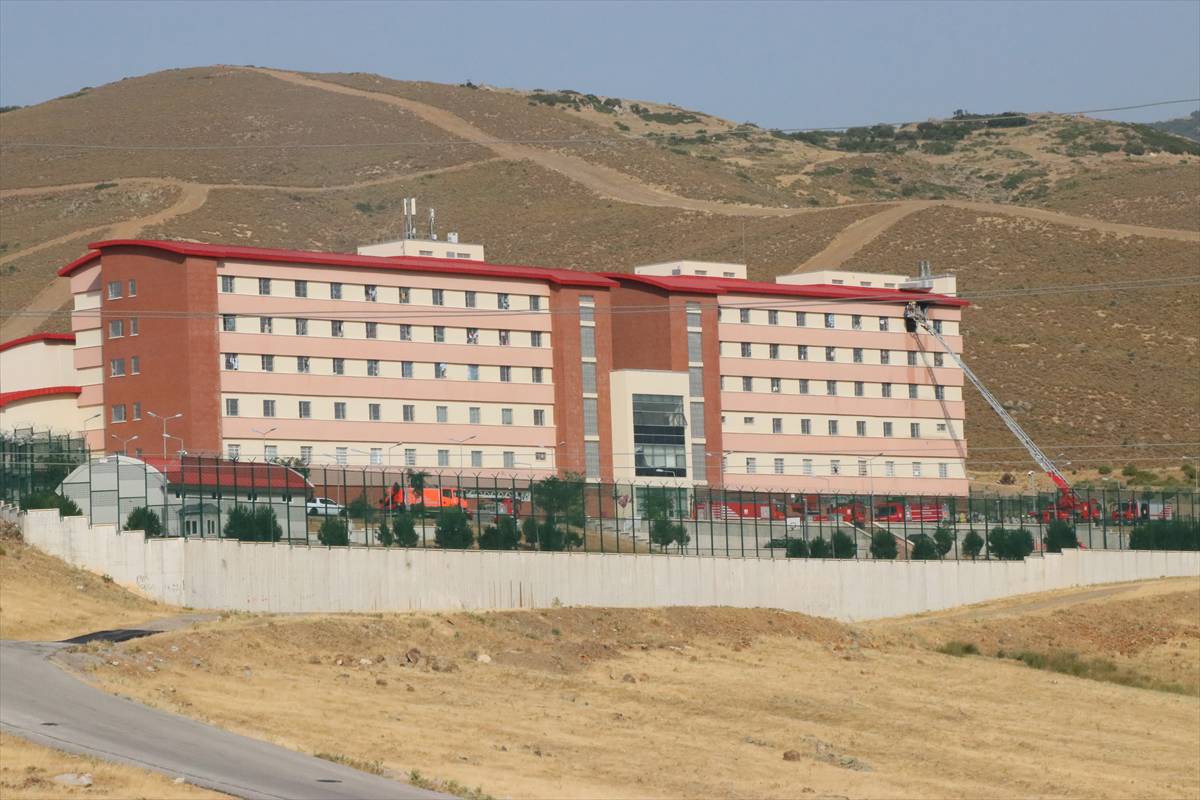



An Êzidî (Yazidi) family attempting to leave Turkey so that their 4-year-old son Alveer, who has severe epilepsy, could receive treatment was detained in İzmir over allegations that their travel documents were forged. While the father was later formally arrested, the mother and her two children were placed in a removal center.
Araz Rasho Qoto was arrested on charges of "forgery of an official document" under an Aug 1 ruling by the İzmir 1st Penal Judgeship of Peace and sent to the Aliağa Şakran Type-T Closed Prison.
The court released Shahbaz Aras Naif Al Abdy with an international travel ban. Immediately after her release, the Migration Management took her and her two young children to the Harmandalı Removal Center, where they were placed under administrative detention.
Attorney Edhem Kuruş, who is handling the family’s case, said the health of 4-year-old Alveer should be given priority.
"What we are discussing today is not merely an immigration procedure or a penal investigation. It concerns the health and safety of a 4-year-old child with severe epilepsy," he told bianet.
The child ran out of medicine
Kuruş said Alveer, born on Apr 2, 2022, regularly takes anti-epileptic medication and that the case file contains medical documents concerning the child’s epilepsy and neurological findings.
According to Kuruş, the family says the medication Alveer had with him when he was taken to the removal center has run out and that they have had difficulty obtaining more.
"No legal dispute should take precedence over the child’s health needs," he said, noting that any disruption to the regular medication of a child with epilepsy could have serious health consequences.
ÊZİDÎ WOMEN SPEAK OUT: S/HE IS MY CHILD/1
Zozan’s Family: You Have No Choice But to Give up Your Child for Adoption
The family are demanding that the child be provided with his medication without interruption, examined by a specialist and, if necessary, transferred to an appropriate health care facility.
Pointing to the Convention on the Rights of the Child, to which Turkey is a party, and relevant provisions of the Constitution, Kuruş said the best interests of children must also be taken into account in administrative procedures:
"Alveer is 4 years old. His sibling is also very young. Their father is in prison, while their mother is being held in a removal center with the two children. Under these circumstances, the impact of administrative detention on the children must also be assessed."
Residence and accommodation guarantee
According to Kuruş, the family has a fixed address where they can stay in Menemen. A Turkish citizen has also pledged to provide accommodation and meet the basic needs of the mother and children, and to take responsibility for the family if they are released from the removal center.
The lawyer also noted that the mother's travel ban and said these circumstances should be considered when assessing alternatives to administrative detention.
ÊZİDÎ WOMEN SPEAK OUT: S/HE IS MY CHILD/2
Meyrem: We are Left With No Choice But to Leave for Afar
Kuruş said Article 57/A of Law No. 6458 on Foreigners and International Protection provides for alternatives to administrative detention, including requirements to reside at a specified address, report to the authorities or provide a signature at designated intervals.
"In this case, there is a fixed address, there is a guarantee that the family will be received and provided with accommodation, and the mother is subject to a travel ban. The authorities should therefore reassess whether the necessary supervision can be maintained without holding her, and especially the young children, in a closed facility.
"If administrative supervision can be ensured through less restrictive and enforceable measures, why is a 4-year-old child with severe epilepsy still being held under these conditions?"
Father's detention
Kuruş argued thatr the detention of the father, Araz Rasho Qoto, should also be reconsidered in light of the family’s current circumstances:
"If the objectives of the investigation can be achieved through less restrictive measures such as judicial supervision, whether continued detention is proportionate should be reconsidered.
"We are not opposed to the enforcement of the law. On the contrary, we want the law to be properly applied. But in applying the law, the right to life, health and best interests of Alveer, a 4-year-old child with severe epilepsy, cannot be disregarded.
"At the center of this case is not merely an immigration procedure or a penal investigation. At the center of this case is a 4-year-old child. And a 4-year-old child’s right to life cannot be made secondary to any bureaucratic consideration." (NÖ/VK)