





Women Have Already Lost Upcoming Local Elections




As local elections on March 29th are approaching, most of the political parties have announced their list of candidates; the number of women among them doesn’t exceed 5 percent.
The Association for the Support and Education of Women Candidates (KA-DER) has revealed that the ruling Justice and Development Party (AKP) has only 18 women candidates for the elections.
The Nationalist Movement Party (MHP) has 35, the pro-Kurdish Democratic Society Party (DTP) has 33, the main opposition Republican People’s Party (CHP) has 46 and the central-right Democrat Party (DP) has 37 women candidates, with a total of 169 in those five parties.
Turkey has 81 cities, 850 townships and 2 thousand 941 districts for which local governors will be elected.
As of now, the ratio of women governors stand only at 0,6 percent, which means only 18 out of 3,225 places are held by women. This ratio didn’t change in the elections in 1999, nor in 2004. Regarding the city councils, women’s participation has only increased slightly, to 1,81 percent. In district councils the ratio stands at 2,42 percent.
KA-DER, which provides support and training to women planning to get involved in politics, demands a 50 percent quota. This demand is met only by the Freedom and Solidarity Party (ÖDP). The DTP also employs positive discrimination for women.(EZÖ/AGÜ)


Hearing-Impaired Demand Suitable Cities

Women Begin Campaigning For Equality In Politics

AKP Disregarded Erdoğan’s Advice on Women’s Quota

Simit Seller Şaziye is Muhtar Candidate in Sivas
That Makes Two: Only One New Female Province Capital Mayor

Local Election Results: Preliminary Results at 11 pm
Mayoral Candidate Birdal: "Kurdish and Democratic Voters Will Change The Course of Elections"

Local Election Results:
AKP Loses Points, CHP, MHP and DTP gain

Local Elections: “Male-Dominated Parties Will Not Get Our Votes”

The Municipalities Erdoğan “Definitely” Wanted…

Hearing-Impaired Demand Suitable Cities
Women Begin Campaigning For Equality In Politics
AKP Disregarded Erdoğan’s Advice on Women’s Quota
Simit Seller Şaziye is Muhtar Candidate in Sivas
That Makes Two: Only One New Female Province Capital Mayor
Local Election Results: Preliminary Results at 11 pm
Mayoral Candidate Birdal: "Kurdish and Democratic Voters Will Change The Course of Elections"
Local Election Results:
AKP Loses Points, CHP, MHP and DTP gain
Local Elections: “Male-Dominated Parties Will Not Get Our Votes”
The Municipalities Erdoğan “Definitely” Wanted…
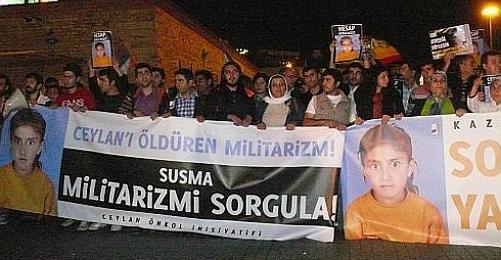
Politician and NGOs Urge for Clarification of Önkol's Death
EU PROGRESS REPORT
Women's Rights Must be Implemented in Daily Life

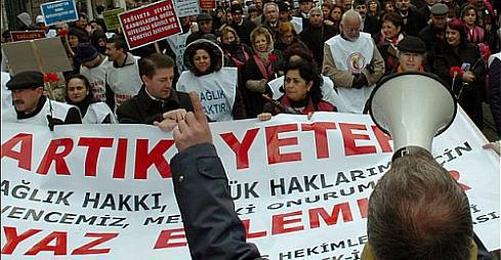
Protests against Health Care Contribution Rate
Greens Launch Trial for Palovit Valley

"When Will Mohsen Abdolkhani and Hamid Karimnia Be Released?"