









Black Sea Floodings
"Disaster Is Not Natural, But Created by Humans"

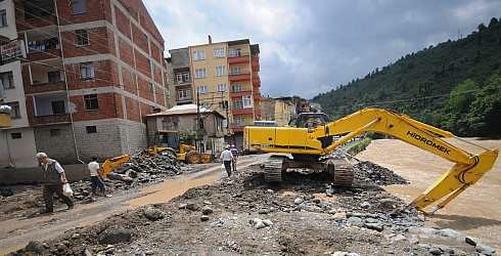



Heavy damages in disaster area
On 21 July, heavy rainfall had caused one death and 30 million TL damages (around 15 million Euros).
More rainfall from 27 to 28 July caused further chaos, and the area has been declared a disaster zone.
Saliha Yayla of the local Yeni Giresun newspaper told bianet that water, electricity and telephone lines were interrupted, and that it was unclear whether the five local newspapers would be able to publish the next day.
Criticism of the new Black Sea coastal road has pointed to the fact that the rainwater, as well as the water from rivers flooding their banks was prevented from reaching the sea by the road.
"Artificial" disaster
According to Demirkan, the construction of the coastal road included the building of a dam, which caused the floodings.
In a written statement, he spoke of an "artificial disaster" caused by bad design.
He blamed the thoughtless application of plans to any city, regardless of its size or natural make-up, saying that many institutions needed to be consulted prior to construction.
Thus, Demirkan said that many people had opposed the coastal road as inappropriate for Giresun's landscape and as a construction that would separate the city from the sea.
Construction needs to be informed
The architect said that urban growth rates in the Black Sea region ranged from 40 to 45 percent, and that road construction needed to take into account the width of water output outlets.
The heavy rain put too much of a strain on the water outlets.
Demirkan believes that anyone knowing the climatic and natural characteristics of the region should be aware of the heavy rainfalls and the proximity of the mountains to the sea. The latter means that more water flows towards the sea.
He called for a reconsideration of the coastal road and its substitution with a project that would respect the nature and people of the area. (SY/EÖ/AG)


FLOOD DISASTER
Engineeers Blame Authorities for Disastrous Flood
32 CASUALTIES IN HISTORIC FLOOD
Torrential Rain in Istanbul Caused Flash Flood in the District of Ikitelli
CLIMATE CHANGE
"Nabucco Project Will Harm Environment"
No Water to Drink but Floods in Ankara!
Protest against illegal power plant
FLOOD DISASTER
Engineeers Blame Authorities for Disastrous Flood
32 CASUALTIES IN HISTORIC FLOOD
Torrential Rain in Istanbul Caused Flash Flood in the District of Ikitelli
CLIMATE CHANGE
"Nabucco Project Will Harm Environment"