Alevi Organizations Urge for Lifting Mandatory Religion Courses




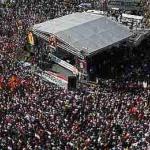
More than hundred people, members of the Pir Sultan Abdal Culture Association (PSAKD) and the Alevi Bektashi Federation (ABF), demanded removal of the mandatory religion courses in schools by having a sit-in activity in Taksim Square of Istanbul. They called upon the government to implement the decisions of the European Human Rights Court (EHRC) and the State Council.
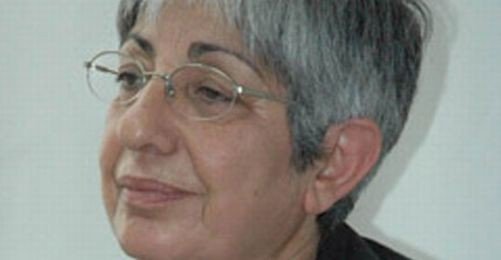
ABF President Ali Balkız, who read the press release, said, “Mandatory religion courses are a human rights violation. It is against the right to education and the freedom of religion and conscience.”
Applying to the European Council
Balkız says that although there are the decisions of the EHRC and the State Council and hundreds of cases in the local courts, the government is still not taking any steps.
“Because of this, we had to take this to the European Council’s (EC) Committee of the Ministers. This is a committee that checks to see if the EHRC decisions are implemented or not. Both the government and we are waiting to see what the decision of the committee will be.”
Demands
The announcement in the ABF site says they can wait no more.
“This course, the official name of which is ‘Religion Culture and Knowledge of Ethics’, is the product of the September 12 Military Coup of 1980 and it prepared the way to the rule of the Justice and Development Party (AKP). The AKP is the result of the conditions created by this climate. The coup-makers should also be tried for this.”
The practical demands of the Alevi organizations are:
- The curriculum for the subject of ‘Religion Culture and Knowledge of Ethics’ should be rewritten, it should be contemporary and scientific, it should include the topics of the History of Religions, the Sociology of Religion and the Culture of Religion.
- Alevi belief should definitely must be taught and the preparation of this section should be left to the Alevi educators.
- At any rate, the course should be an elective.
The activity will continue
Balkız says they will continue their activity every Sunday until the first day of the schools, until their demands are met.
Ali Abbas Coskun for the Youth Commission Hubyar Sultan Alevi Culture Association and Ceyhun Günal for the Illuminated Youth Assembly Initiative have made announcements supporting the sit-in activities.
ERHC’s Decision
The ERHC had stated in its November 2007 decision that the mandatory religion courses were a violation of “the right of education.”
In Hasan Zengin and his daughter Eylem’s application, the court had emphasized that the content of these courses were based on Islam’s sunni interpretation. Moreover, the court had claimed that keeping the non-muslim students exempt from these classes was not enough for “the freedom of belief.”
Minister of Education (MEB) Hüseyin Çelik had stated previously that this decision was about the old curriculum. Since Alevi belief was included in the new curriculum, according to the minister, this decision by the ERHC was inapplicable. (EÜ/EZÖ/TB)


DEMONSTRATION AGAINST DISCRIMINATION
More than 200,000 People Demonstrate for Alevi Rights
Alevites Continue Protesting The Mandatory Religion Courses

Sunnite Teaching Dominates Textbooks For Religion

“Mandatory Religion Courses Are Everyone’s Concern”

Alevi Reaction To Mandatory Religion Courses Spreads
Mandatory Religion Classes Continue To Torture
Compulsory Religious Education is Hypocritical Violation of Rights
ECHR: Compulsory Religious Education Violates Rights
DEMONSTRATION AGAINST DISCRIMINATION
More than 200,000 People Demonstrate for Alevi Rights
Alevites Continue Protesting The Mandatory Religion Courses
Sunnite Teaching Dominates Textbooks For Religion
“Mandatory Religion Courses Are Everyone’s Concern”
Alevi Reaction To Mandatory Religion Courses Spreads
Mandatory Religion Classes Continue To Torture
Compulsory Religious Education is Hypocritical Violation of Rights
ECHR: Compulsory Religious Education Violates Rights
SOCIAL GENDER EQUALITY
Women and Journalists Hand in Hand against Violence
EUROPEAN COMMISSION AGAINST RACISM AND INTOLERANCE
Discrimination and Racism in Turkey Fuel Concern

Unionists in Northern Cyprus Protest PM Erdoğan
Policeman who Beat Juvenile Claimed Self-Protection
HRANT DINK MURDER
Court fully Protects Istanbul Police