TURKISH GEORGIANS PLATFORM
Georgians Demand Education in Their Mother Tounge
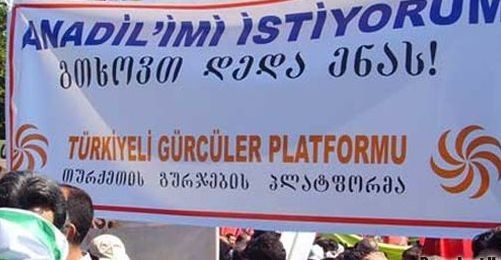



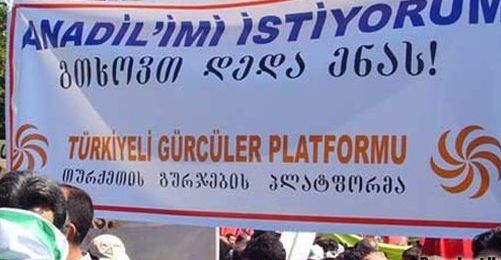
The Turkish Georgians Platform (TGP) issued a press statement demanding Georgians' right to education in their mother language as well as constitutional guarantees for all native languages spoken in Turkey.
"Education in one's mother tounge is a universal human right. We are not going to allow the assimilation of our identity," TGP member Fazlı Kaya told bianet.
Rights violations pertaining to matters of identity and native languages constitute Turkey's most fundamental problem, and such issues have gained a higher profile particularly in relation to the Kurdish problem, the TGP's statement said, while it also called for everyone to show a similar degree of sensitivity for other peoples as well.
Authorities have tried to Turkify all peoples in the country, starting from the first year the republic was established, and peoples other than Turks have been entirely ignored according to the definitions of identity prescribed in the constitution, the statement said.
Debates over elective native language courses and the issue of education in one's mother tounge will only reach their goal when the matter is discussed within a constitutional context, according to the TGP.
"The definition of citizenship [prescribed] in the constitution imposes a single identity. Everyone who lives in Turkey is a Turk, according to the constitution. This has to be abolished first, and then the constiution has to express the identities and languages of other peoples, too," Fazlı Kaya, who also once served as the head of the Georgian Culture Center, told bianet.
"Peoples other than Turks and Kurds never figure into public discourse"
Kaya referred to the recent decision to introduce native languages spoken in Turkey as elective courses into school curricula as an important step but also expressed reservation with regard to the true motive behind such a move:
"I believe this is a tactical move. We see that the state is still not sincere regarding its attitude toward mother tounges and identities, particularly [in view of] the current state of the Kurdish problem," he said.
The reduction of the demands of the Laz, the Circassians and Georgians solely to the Kurdish problem constitutes an injustice, Kaya said. "Is rebellion the only means to win fundamental human rights?" he asked.
Peoples other than the Turks and the Kurds never figure into public discourse, according to Kaya, who also said it must be accepted that a great majority of the Laz, the Circassians and Georgians have already been assimilated.
The nearly 2 million Georgians living in Turkey are no longer able to transmit their mother language and culture to new generations, he said.
"The assimilation of a great majority of the Georgians living in Turkey has reached its final frontier. The new generation in particular cannot speak its mother tounge. They only express their Georgian [identity] as an ethnicity but have not inherited any cultural codes. As far as I am concerned, there will not even be anyone left in Turkey calling themselves Georgian if things stay their course for the next 30 to 40 years," he added. (SA/HK)


“EDUCATION REFORM”
Government’s Native Language Courses Fail to Draw Interest
Education Reform Bill to Introduce Caucasian Language Courses
International Mother Language Day Festival on bianet
Ethnic Georgians of Turkey Protest The Russian Occupation
“EDUCATION REFORM”
Government’s Native Language Courses Fail to Draw Interest
Education Reform Bill to Introduce Caucasian Language Courses
International Mother Language Day Festival on bianet
Ethnic Georgians of Turkey Protest The Russian Occupation
"URBAN TRANSFORMATION"
NGOs File Complaint Against Fatih Municipality
ALEVİS RESPOND TO PM ERDOĞAN
“The State is Responsible for Unlicensed Alevi Houses of Worship”
PINAR SELEK ON TRIAL
Court Adjourns Selek Trial, Rejects Plea in Kurdish
Court Unjustly Bans Cegerxwîn Name