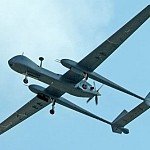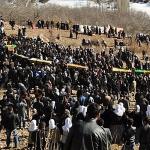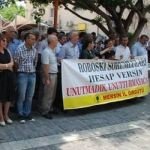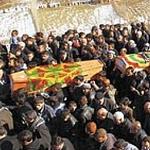



Wall Street Journal newspaper reported that a U.S. drone spotted some images before the bombing known as Roboski massacre.
The article written by Adam Entous and Joe Parkinson states that the information was based on the report of U.S. Defense Department.
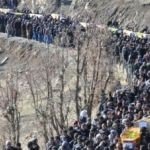
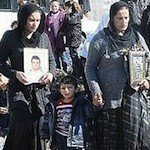
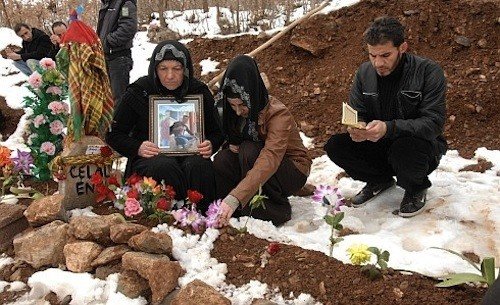
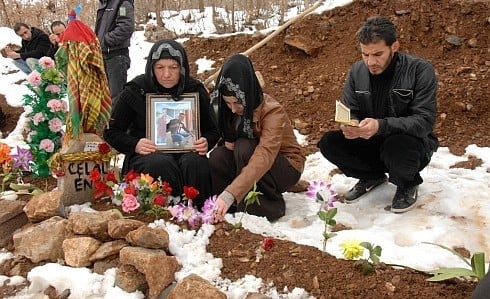
The bombing caused the death of 34 civilians from the villages of Gülyazı (Bujeh) and Ortasu (Roboski) in Uludere, Şırnak on 28 December 2011.
"Turkish Military made the decision"
"The Turks made the call, it wasn't an American decision." said a senior U.S. defense official, according to the article.
"U.S. drone flights in support of Turkey date from November 2007, when the Bush administration set up what is called a Combined Intelligence Fusion Cell in Ankara. U.S. and Turkish officers sit side by side in the dimly lighted complex monitoring real-time video feeds from Predator drones"
"They said 'fly your drones somewhere else' and we did so"
According to the report of the U.S. Department of Defense announced by WSJ, US drones spotted a convoy returning to Turkey on Dec. 28.
U.S. military officers at the Fusion Cell in Ankara couldn't tell whether the men, bundled in heavy jackets, were civilians or guerrilla fighters. But their location in an area frequented by guerrilla fighters raised suspicions. The Americans alerted their Turkish counterparts.
U.S. officials said additional surveillance from the Predator might have helped the Turks better identify the convoy. But, they said, Turkish officers instead directed the Americans who were remotely piloting the drone to fly it somewhere else. U.S. officials said compliance with the Turks' request was standard procedure.
"I heard the dull hum of Herons (the Israeli-made surveillance aircraft used by Turkey) Then Turkish warplanes appeared and the bombing began" told Servet Encü who was in the caravan but survived the massacre to WSJ writers.
consistent with the report of Ministry of Interior
According to the report of the Ministry of Interior presented to Uludere Sub-commission, established under the Parliamentary Human Rights Investigation Commission, there is a shift at the Heron records.
"There may be a second Heron or the coordinates given by F-16s are entered or an image support is provided from another country" underlined the report as the possible reasons of this shift. The Commission decided to ask for the opinion of Military Electronics Industries (ASELSAN - A Turkish cooperation producing defence electronic systems and military radios for the Turkish arm)
According to the 230-paged "Uludere Case Inquiry Report", there are some findings that raises serious doubts on the presence of an intelligence support from another country.
"The Land Forces carried out the operation, by-passing and without informing the Minister of Interior, Gendarmerie General Commander and the Governor. The department assessing Heron records was in negligencein performing its duty" emphasizedat the report.
Diyarbakır Special Authority Prosecutor is in charge of the massacre investigation.
Peace and Democracy Party (BDP) Mersin Deputy and member of Uludere sub-commission Ertuğrul Kürkçü told bianet that Ministry of National Defence's report did not answers any of the questions". (AS)
*Click here for the original WSJ article