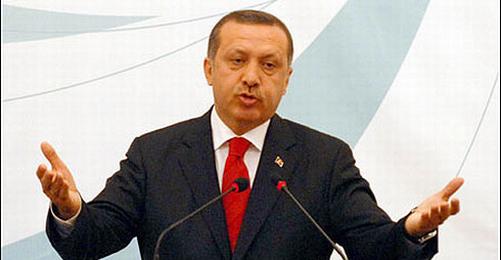
Students Refused Deputy Prime Minister to Talk on Human Rights




* Click here to watch the video of the incident.
State Minister and Deputy Prime Mininster Cemil Çiçek visited Ankara University to talk to students about human rights. However, the students reminded that Çiçek awarded colonel Ali Ertosun, one of the people held responsible for the "Operation Return to Life" with the state medal for eminent services.
In the Return to Life operation during the week of December 19-26, 2000, 10,000 Turkish soldiers violently occupied 48 prisons to end two months of hunger strikes and "death fasts" by hundreds of political prisoners. The hunger strikers were protesting the state's plan to transfer its prisoners from large wards to US-style "F-type" cells holding one to three occupants. The operation -- which left at least 31 prisoners and two soldiers dead -- lasted a few hours in most prisons, and up to three days at one prison.
Çiçek left the university before he was able to give his speech at the podium, after a considerable part of the audience applaused to support the students' protest.
"Get out of this school, Çiçek"
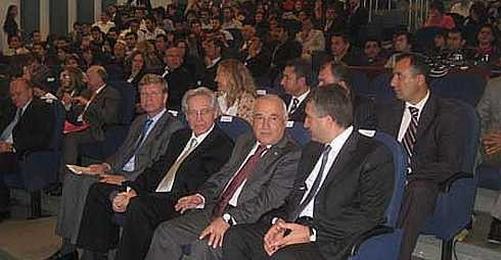
Çicek was actually going to participate in an event on the topic "Democracy and Human Rights" organized by the European Commission and the Political Science Department Human Rights Center of Ankara University. A student sitting in the audience stepped on the podium during the opening speech of the event to chime in.
The student drew attention to several disputable incidents: the medal Ertosun was awarded with by Çiçek, 14-year-old Ceylan Önkol allegedly killed by military firearms, Engin Çeber who was tortured and killed in police custody and Güler Zere who is kept in detention despite being ill from last stage cancer. Pointing also to salary income cuts of workers, the student concluded, "We do not believe that the deputy prime minister of such a country has got a lot to say about human rights".
The majority of the audience supported the student's protest with their applause.
After the applause Çiçek addressed the student, "If this discussion is hold on behalf of democracy, you have made use of your right. Now I will talk". Just when the deputy prime minister started to talk another student stepped in and asked, "This meeting is being surrounded by police. Could you explain that to us?" When Çiçek answered the question the audience again showed their support to the student by applauding.
The student also reminded Çiçek of the police intervention regarding last week's demonstrations against IMF and World Bank. Çiçek answered, "When I came here I knew there would be reactions like this". The students asked, "So, under which aspect did you come here? We are students of this university and we want you to go"
When the police was hindered by academics to remove the students from the hall, Çiçek left with his bodyguards through the back door, accompanied by the students' slogan "Get out of this school".
After Çiçek had left, the students also asked the police and the bureaucrats to leave the hall.
When the police and bureaucrats had left under further slogans, one of the students said, "So now we prepared the base for a democratic-academic discussion. First speaker Ahmet İnsel eased the tension after the incident by saying, "Actually, the police could have stayed. They have a lot to learn about human rights". (BÇ/VK)
* Video: sendika.org