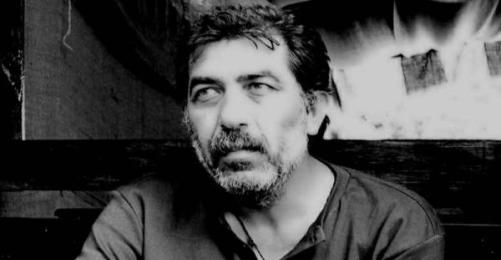









"Even in the times of dictators like Hitler or Mussolini, 1 May was a public holiday. We cannot accept that it is still not a holiday or celebrated in Turkey, and that violence is used to prevent such celebrations. Our clear and certain demand is that 1 May be a public holiday.”
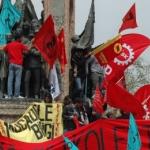
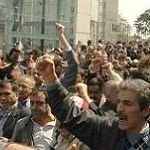
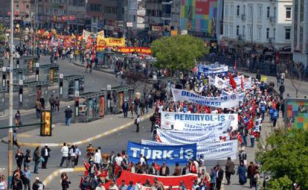
Sami Evren, president of the Trade Union Confederation of Public Workers (KESK), spoke to bianet, saying that the workers would celebrate Labour Day in Taksim Square.
Insistence on Taksim Square
Evren said that KESK, DİSK (Trade Union Confederation of Revolutionary Workers) and Türk-İş, another trade union, were collaborating to organise events.
DİSK announced last week that they would be in Taksim Square on 1 May.
Evren expressed his sadness at the fact that 1 May celebrations in Turkey had been reduced to discussions about clashes in the last years, saying, “This has become state policy, and the aim is to ignore the demands of workers.”
“We want workers to be in Taksim Square, sing the Internationale, and counter the policy packages of the government with their own demands in solidarity. It is unacceptable that this is opposed, that people are terrorised and chaos is created, and that 1 May is reduced to a debate on locations.”
He reminded bianet that the police had been allowed to march in Taksim on last Sunday (5 April) as part of Police Week: “Taksim is banned for workers and those seeking their rights; our greatest objection is to this favouritism. We want everyone to be able to freely organise their celebrations.”
"Bloody 1 May"
Taksim Square has high symbolic value for workers. On 1 May 1977, later known as "Bloody 1 May", unknown assailants fired shots on a crowd of around 500,000 who had gathered in Taksim Square. The police is said to have attacked workers rather than looking for the perpetrators. In the ensuing chaos, 37 people died and many were injured. The event was never investigated satisfactorily.
1 May stopped being a public holiday in 1981, following the military coup a year earlier. Taksim Square became forbidden as a gathering place for workers.
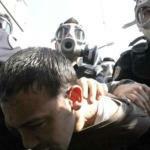
In 2007 and 2008, workers insisted on gathering in Taksim, and faced great police resistance.
Workers' voices are silenced
Evren criticised the attitude of the government:
“You let employers dismiss workers without saying a word and do not prevent it, and then you want to prevent the dismissed workers from protesting.”
“When will we have our voices against the crisis heard if not on Labour Day? I am going to be fired, I am going to be hungry, and I will not be able to shout my protest. If it is forbidden to express ourselves, then the state has become a fascist state.”
Prime Minister has ordered holiday
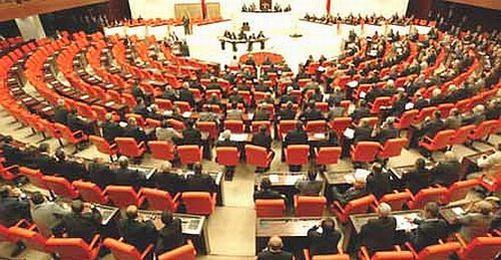
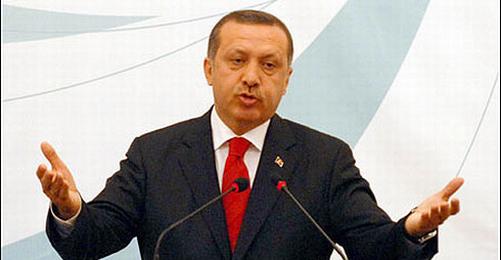
Recently, Istanbul MP Mustafa Özyürek of the Republican People’s Party (CHP) suggested in parliament that 1 May be a public holiday. All parties have made similar suggestions. Newspapers today (9 April) report that Prime Minister Erdoğan has ordered Minister of Employment and Social Security Faruk Çelik to announce 1 May as a public holiday. (BÇ/AG)