









Security Forces Deny Murder of Engin Çeber



Case background
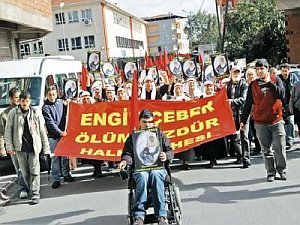
Engin Ceber (29) was a Turkish human rights activist who was tortured and killed while in police custody. Mehmet Ali Sahin, Turkey's justice minister apologized and announced that 19 officials had been suspended pending investigation.
Ceber was arrested after he issued a press release protesting that the shooting of a left-wing human rights activist by the police, which resulted in his paralysis, has not been investigated or punished by the authorities.
He was sent to a prison in Istanbul, where he was severely beaten. After complaining to his lawyer, he was sent to a hospital, where he fell into a coma, dying of brain hemorrhage on 8 October 2008.
Amnesty International criticized Turkey's human rights record arguing that the death is "further proof that torture and ill-treatment are rife in places of detention in Turkey", despite the government "zero-tolerance" against torture.
60 people on trial
60 people are now on trial in the case. Joint attorney Oya Aslan told bianet that the case prosecutor has accepted the lawyers’ demand to include extra evidence concerning the accusation of torture. This means, so Aslan, that those defendants now accused of maltreatment, not notifying someone of their duty and use of force may later also be tried for using torture.
The lawyer found this development important,arguing that the prosecution now also believes that torture took place.
"Only shouting"
At the hearing, head prison officer Yılmaz Aydoğdu clearly described the maltreatment that Çeber and his friends were exposed to on 6 and 7 October. He said that the report prepared by second prison director Fuat Karaosmaoğlu did not reflect the reality, and that he was forced to sign it.
Aslan argued that this showed Karaosmanoğlu’s responsibility for the events.
Yusuf Gayır, second prison director and defendant in the case, said that he was on duty that night. In the case of disturbances he was supposed to be notified; he claims that he was not. He also said that he never saw Çeber and his friends who were brought to prison that night.
Kadem Karadeniz, the prison’s head officer, said that he was responsible for counting the prisoners in the morning of 1 October 2008. When he went to cell D3, which had been denoted as “quarantine cell”, three inmates refused to get up for the count.
Karadeniz claimed that during the time he was in the cell, these three inmates were not interfered with. When one of Çeber’s lawyers asked whether there was a power cut at that time, Karadeniz said: “There was a short power cut, but it came back immediately.”
When asked in court whether it was true that “proportional force” had been used, gendarmerie Private Hüseyin Arslan said that there was shouting.
Gendarmerie Senior Sergeant Major Abdülkadir Öztekin said that Özgür Karakaya resisted a search. He claims that he told the gendarmerie Privates on duty to search him, and that he, taking a truncheon that was lying on the table with him, left.
Judge Nesibe Özer asked: “From what you are saying, there was none of the proportional force used in the report. What is the proportional force you mentioned?” Öztekin said, “We shouted. Here we described stripping the person as proportional force.”
Human rights activist monitoring case
The court hearing was attended by joint plaintiffs Cihan Gül, Özgür Karakaya, Aysun Baykal, Engin Çeber’s father Ali Tekin, and his sister Şerife Çeber. Representatives of Human Rights Watch (HRW), Amnesty International (AI), the Van Bar Association and the Istanbul Bar Association’s Human Rights Centre were also present.
The court case continues today. (BÇ/AG)
IMPUNITY OF TORTURE
Complaining Police Officers Could Not Be Questioned

ENGIN ÇEBER CASE
Impunity in Torture Case with New Prosecutor?

ENGİN ÇEBER Torture Case
Prison Chief Threatened Fellow Prisoners after Torturing Çeber

Torture Suspect Sexually Assaults Victim’s Sister

TORTURE
Torture Case of Killed Activist Çeber Postponed

Lawyers Cannot Have The File In Ceber’s Death
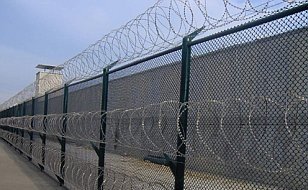
IHD: 38 Died in Prison in 2008

60 Officials Will Be Tried For Ceber’s Death Due To Torture
Amnesty International Launches An Emergency Action For The Tortured Activists

Justice Minister Recognizes The Possibility Of Torture

IMPUNITY OF TORTURE
Complaining Police Officers Could Not Be Questioned
ENGIN ÇEBER CASE
Impunity in Torture Case with New Prosecutor?
ENGİN ÇEBER Torture Case
Prison Chief Threatened Fellow Prisoners after Torturing Çeber
Torture Suspect Sexually Assaults Victim’s Sister
TORTURE
Torture Case of Killed Activist Çeber Postponed
Lawyers Cannot Have The File In Ceber’s Death
IHD: 38 Died in Prison in 2008
60 Officials Will Be Tried For Ceber’s Death Due To Torture
Amnesty International Launches An Emergency Action For The Tortured Activists
Justice Minister Recognizes The Possibility Of Torture