





General Staff Launched New Investigation into "Piece of Paper"


The General Staff announced that a new investigation has been launched into the "Action Plan against Reactionary Forces", the controversial document showing alleged plans to discredit the ruling Justice and Development Party (AKP) and the religious movement led by Fethullah Gülen.
The General Staff declared in a written statement that the military prosecutor started the investigation on 26 October at 1.30 pm.
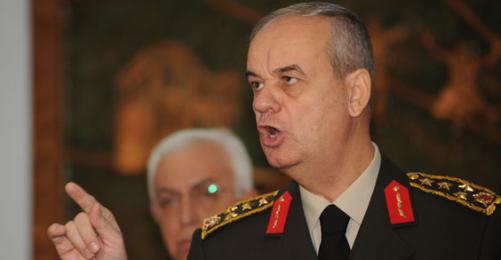
For the previous investigation the military prosecutor had decided that there was "no space for prosecution". Chief of General Staff İlker Başbuğ had merely referred to the document as a "piece of paper" in a press conference on 26 June this year.
The General Staff reminded Başbuğ's comment made in the press conference and said, "The decision that there is no space for investigation is not certain. If new information or circumstantial evidence occurs, we can re-open this investigation of course".
The letter of advice was sent to the prosecutors of the Ergenekon investigation with the original document attached. Başbuğ argued that he called the document a 'piece of paper' in the press conference because he believed that it was not the original one.
"No right for contempt of the military prosecutor's decision"
The General Staff feels disturbed by the criticism of the military prosecutor's decision: "The military prosecutor's decision was reached as a result of an independent and unbiased investigation. Nobody who claims to respect the law has the right or the authority to contempt the decision and to attempt to cast a shadow on the decision".
General Staff disturbed by the document's leaking to the press
News about the letter of advice was published in the press on 24 October.
The General Staff expressed their concern about this situation in yesterday's press conference, "If there is a document with inherent evidence, then the place where it belongs is not the media but the official investigation authorities".
"The ones responsible for the leakage should be punished"
"This kind of behaviour can be a reason to cast doubt on the investigation and spark mistrust between institutions. The developments we experienced can be perceived as efforts to create new evidence and this matter cannot be reconciled with the principle of the indubitable rule of law".
"In this context, behaviour that can result in extrajudicial killings concerning incidents subject to the investigation must be avoided; leaking of information and documents meaning a violation of the investigation's confidentiality must be prevented and the perpetrators must be punished". (TK/VK)

Court Rejected Military Prosecutor's Demand for Çiçek's Detention

CHRONOLOGY
"Action Plan against Reactionary Forces" - a Chronology

Plan against AKP and Gülen
Military Prosecution: Document Not Prepared by General Staff
Ertuğrul Kürkçü on the Alleged Plan against AKP and Gülen
"Allegations of Plan Legitimise Gülen Movement"
Court Rejected Military Prosecutor's Demand for Çiçek's Detention
CHRONOLOGY
"Action Plan against Reactionary Forces" - a Chronology
Plan against AKP and Gülen
Military Prosecution: Document Not Prepared by General Staff
Ertuğrul Kürkçü on the Alleged Plan against AKP and Gülen
"Allegations of Plan Legitimise Gülen Movement"
KURDISH QUESTION
PKK Ceasefire to be Terminated on 31 October?
KCK CASE
Court Dismissed Request for Defence in Kurdish
7th Istanbul Gathering for Freedom of Thought
CONSTITUTIONAL AMENDMENTS
58 Percent Said "Yes" to Constitutional Reform Package
Rights Organizations 3 Years ahead of Foreign Minister