YOUNG MEDITERRANEANS
Young Population, Education, Unemployment And Politics




In 2025, Turkey will become the country with the highest young population in the world. Currently it is the second country with the youngest population, right after Mexico. 20% of them live in Istanbul.
84% of the youngsters of secondary-school age go to school. There are a total of 139 universities throughout Turkey, 94 of which are state-owned and 45 of which are private foundations. There are close to 3 million university students. Only 24% of the youngsters go to university and a total of 350 thousand students graduate from universities each year. 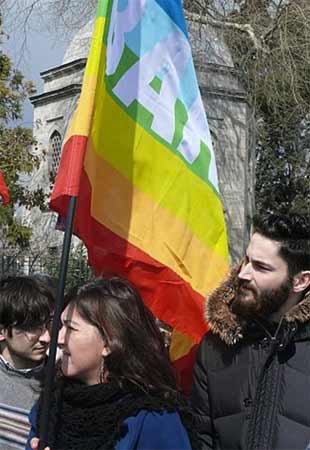
4% of the youngsters are illiterate. 23% are elementary school graduates, 18% are secondary-school graduates, and 55% are graduates of vocational schools, high schools or universities.
The number of Kurdish youngsters receiving secondary or tertiary education is low throughout Turkey. Only 36% of them attend high school, vocational school or university. Moreover, 24% of the Kurds living in villages are illiterate, and 8% learn how to read and write without going to school. This means that 1/3 of the Kurds in villages do not even receive elementary school education.
While the total unemployment rate in Turkey is 11%, the unemployment rate among the young generation goes up to 20%. 75% of women aged between 20-29 years do not make part of the workforce. 85% of the women who live in cities and who do not work state that they don't work because they are housewives.
18.5% of the unemployed youngsters are university graduates.
According to the constitution, the minimum age required to be elected to parliament is 25; however, this does not encourage young people to participate in politics. The 1980 military coup brought about a depoliticisation process due to which the young people's political participation level has decreased. Only 3.7% of the youngsters in Turkey are members of a political party. The proportion of youngsters, who are members of an association or other non-political group is only 3 percent.
Certain existing regulations prevent youngsters, especially university students from getting involved in politics. The Higher Education Board (YOK) Student Discipline Regulations require that any student, who participates in a political act within the higher education board, should get suspended from university for up to a month.
Moreover, according to these regulations, boycotting, keeping and making copies for distribution of statements, banners, headscarves for political or ideological purposes; and disseminating oral or written ideological propaganda, are among acts that require expulsion from the board.
Of course, in return, youngsters express themselves with new political participation methods through new communication technologies, which they master much better than adults, rather than participating in traditional politics that are monopolized by "adults."
Even though they all have different social, cultural, economic and political identities, the young people of Turkey have a common desire. And that desire is "to live without clashes and fights, and free, on the land where they were born."(ÇT)


Université Marc Bloch’da sosyoloji bölümünden mezun oldu. 2009’dan 2011’e kadar AFP’de fixer ve çevirmen olarak çalıştı. Gazeteci Burcu Karakaş ile Açık Radyo’da Cadı Postası programını yaptı. 2015 Müşerref Hekimoğlu Başarı Ödülü'nü aldı. 2011-2018 arasında bianet’te kadın ve LGBTİ haberleri editörü olarak çalıştı.

TURKISH MEDICAL ASSOCIATION
Health Standards in Turkey Lose in International Comparison

young mediterraneans
A Portrait of Tunisian Youth
young mediterraneans
On the Podium Despite Everything: Portrait of a Young Tunisian Woman

Young Mediterraneans
Turkey: Different Identities, Similar Concerns
TURKISH MEDICAL ASSOCIATION
Health Standards in Turkey Lose in International Comparison
young mediterraneans
A Portrait of Tunisian Youth
young mediterraneans
On the Podium Despite Everything: Portrait of a Young Tunisian Woman
.jpg)