





OECD REPORT ON FAMILY WELL-BEING
The Difficulty of Being a Woman or a Child in Turkey



The Organization for Economic Co-operation and Development (OECD) published a report on the changing structure of the family.
"Fertility rates have been persistently low in many OECD countries leading to smaller families. With marriage rates down and divorce rates up, there are an increasing number of children growing up in sole-parent or reconstituted families. Sole-parent families are of particular concern due to the high incidence of poverty among such households", the OECD summarized their findings.
The report frequently draws attention to the situation in Turkey. The country is often mentioned in the report as an example on the negative end or as a country where relevant data could not be collected.
Even though the Turkish Health Ministry announced a significant drop in infant mortality rate on 15 April 2011, the picture drawn by the OECD is not that bright at all.
Women at home
Turkey, for instance, was the country with the lowest rate of women participating in business life in the 1980's. Even worse, data collected since 1988 suggest that the ratio of working women in Turkey never exceeded 40 percent. Even more startling, Turkey is the only country among the group of countries surveyed where women withdrew from work life continuously. In 2009, the rate of working women fell below 25 percent. 30 percent of all working women gave birth in 1990's compared to a ratio of 22 percent in 2009.
Youth is uneducated and unemployed
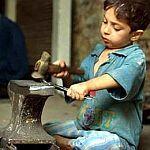
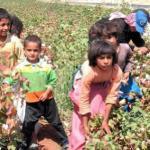
The structure of the Turkish family also affects the children. In 2007, 30 percent of all children aged 5-15 years old were deprived of education, vocational training or work life. This ratio rose to 35 percent in 2010. The corresponding average among 31 OECD countries amounts to a mere six percent. Turkey and Israel are the only two countries that suffered a decline in this aspect and range way above average.
One out of four children live below poverty line
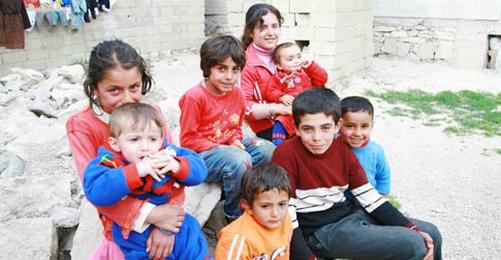
With 25 percent, one quarter of all Turkish children live below the poverty line. Turkey is in third position and only being topped in this ratio by Israel and Mexico. While developed countries are facing the problem of child obesity, Turkey and Russia are among the countries with the highest number underweight children.
Turkey is also showing the highest figures for infant mortality. 21 out of 1,000 infants die. The OECD average is as low as 1.5.
At the bottom line it does not surprise that the OECD report revealed that 33 percent of all children in Turkey are not happy with their lives.